
• Skip to primary navigation
  • Skip to main content

Nautilus Nautilus logo

  • About
    • Blog
    • Areas We Serve
  • Services
  • FAQs
  • Contact
CALL NOW 561-637-4242 Available 24/7
  • About
    • Blog
    • Areas We Serve
  • Services
  • FAQs
  • Contact
  • CALL US (561) 637-4242

In Home Care

Does Home Care Help Seniors with Medication Management?

Taking medications is part of everyday life for seniors. They may take a pill for blood pressure in the morning. Or insulin between meals. With multiple conditions at once, managing the medication may become challenging.​

Seniors may miss their dose. Or they take the same medication twice. Also, mixing up prescriptions can lead to health problems.

​Medication mistakes happen for many reasons. Sometimes it happens because of memory changes. Or poor eyesight can make labels difficult to read. Arthritis can make childproof bottles difficult to open.

​But family members may not always be present to supervise medication. This is the main reason why many begin to look for additional support. Home care helps seniors follow their medication schedule and prevent mistakes.

Key Takeaways

  • Medication routines often become more complicated as seniors manage multiple health conditions and prescriptions.
  • Memory changes, poor eyesight, and reduced dexterity increase the risk of missed doses or medication errors.
  • Taking medications incorrectly can lead to serious health complications, emergency room visits, or hospitalizations.
  • Home caregivers provide medication reminders and help seniors follow their physician’s instructions without changing medications or dosages.
  • Organized medication schedules reduce confusion and make daily routines easier to manage.
  • Consistent medication management helps control chronic conditions and supports long-term independence.
  • Families gain peace of mind knowing a caregiver is helping monitor medication routines.
  • Medication support can increase over time as a senior’s health, memory, or mobility changes.
  • Warning signs include forgotten doses, duplicate medications, missed refills, and increasing frustration with medication routines.
  • Medication reminders are one part of a personalized home care plan that can be adjusted as care needs evolve.

​

Why Medication Management Becomes More Difficult With Age

Most seniors don’t struggle because they’re careless. Medication routines become more difficult over time.

​A healthy senior may take one prescription each morning. Ten years later, they manage medications for heart disease, diabetes, arthritis, high cholesterol, and osteoporosis.

​Some pills need to be taken with food, while others are taken on an empty stomach. One medication should be taken twice a day, while another is only taken every other evening.

​But misunderstanding the instructions can reduce the medication’s effectiveness or cause side effects.

​

The Risks of Poor Medication Management

Medication mistakes can have serious consequences. Missing blood pressure medication for several days can cause high readings. Taking too much insulin can lead to low blood sugar. Missing antibiotics may not clear the infection, so it can return.

​For families, it is difficult to spot the symptoms. A senior may become unusually tired or dizzy because they accidentally took the wrong medication for weeks. Families may assume these changes are part of aging.

​There are also practical challenges. A senior may forget to refill their prescriptions. Or they may not notice the expired medication in the cabinet due to poor eyesight.

​A senior may continue taking a medication that a doctor discontinued just because it was never removed from the cabinet.

​

How Home Care Supports Medication Management

Professional caregivers help with medication management. They do not prescribe medications or change doses. Their role is to assist the senior in following the medication schedule as prescribed by their healthcare providers.

​Gentle medication reminders are one of the most valuable forms of support. For many seniors, a simple reminder to take their medication is enough. This is especially important for those with mild memory loss.

​A caregiver may visit every morning and evening to ensure that medications are taken correctly. Some agencies may also offer scheduled reminder calls, depending on the care plan. At scheduled times to remind the senior. Keeping the routine consistent reduces the chance of missed or duplicate doses.

​Caregivers can organize the medication schedules. For example, a senior has a kitchen cabinet with ten different prescription bottles, each with different instructions printed in small text. It is easy to become confused.

​The caregiver keeps the medications organized according to the physician’s instructions. This makes the routines smoother and reduces stress.

​But taking medication correctly isn’t just about preventing illness. It helps seniors stay active and independent. When medications are managed well, the chronic conditions are more stable. Blood pressure is under control, and diabetes is easier to manage. The pain is reduced, and breathing problems are less likely to worsen.

​The stability means fewer emergency room visits and fewer hospital stays. Seniors can remain independent and enjoy their favorite everyday activities.

​A grandmother takes her arthritis medication correctly thanks to her caregiver. She may be able to attend her grandson’s soccer game.

​A grandfather manages his heart medication correctly. A caregiver visits every day to ensure they are taken on time. He feels well enough to continue meeting his friends for coffee each week.

Topic Key Information Benefit / Impact
Why Medication Management Becomes Difficult Multiple prescriptions, different schedules, memory changes, poor eyesight, arthritis, and complex instructions make medication routines harder. Greater risk of missed doses, duplicate doses, and medication confusion.
Risks of Poor Medication Management Missing medications, taking incorrect doses, forgetting refills, or using discontinued or expired prescriptions. Can lead to worsening health conditions, side effects, infections, emergency visits, or hospitalization.
How Home Care Helps Caregivers provide medication reminders, organize medication routines, and help seniors follow physician instructions. Reduces missed or duplicate doses and improves medication adherence.
Health Benefits Consistent medication routines help manage chronic conditions like diabetes, heart disease, arthritis, and high blood pressure. Supports independence, reduces pain, improves overall well-being, and lowers hospitalization risk.
Peace of Mind for Families Caregivers help monitor medication routines, remind families about refills, and provide consistent support. Reduces caregiver stress and allows families to focus on spending quality time together.
When More Support Is Needed Medication assistance may increase after surgery or with progressive conditions such as dementia. Flexible care plans adapt as health needs change without disrupting routines.
Warning Signs Forgotten doses, duplicate medications, incorrect refill timing, difficulty opening bottles, confusion, dizziness, fatigue, or frustration with medication routines. Early recognition helps prevent serious medication-related complications.
Medication Management Within Home Care Medication reminders are combined with services such as meal preparation, transportation, bathing, dressing, housekeeping, mobility assistance, and companionship. Provides personalized support that allows seniors to remain safely at home.
Key Takeaway Medication management is an important part of maintaining health, safety, and independence for older adults. Professional home care provides reliable support while helping seniors continue living comfortably at home.

​

Home Care Gives Families Peace of Mind

Family members often worry whether their loved one has taken their medications correctly. Adult children call every morning to ask their elderly parents whether they took their pills. Some drive across town to check medication boxes or refill prescriptions.

​This can become overwhelming. Family members balance their careers, children, and caregiving responsibilities.

​A professional caregiver can step in to help. Knowing someone checks the medication routines gives families peace of mind. They stress less about their loved one missing their medication. Conversations shift from reminders to family life.

​

When Medication Support Needs to Increase

Medication needs often change gradually. A senior may initially need occasional reminders. As vision, memory, or mobility declines, they may require daily assistance.

​For example, a senior recovering from surgery may temporarily need help. A caregiver visits every day to organize several new prescriptions. After recovering, he can manage his medications independently.

​Another senior with dementia requires long-term assistance. Remembering medication schedules is more difficult, so they need consistent assistance.

​One advantage of home care is flexibility. This means support can begin light and increase when health conditions change. Families don’t have to make major lifestyle changes. The level of assistance grows with the senior’s needs.

​

Signs Your Loved One May Need Help Managing Medications

Families may not realize their loved one is struggling with medications. But there are often small warning signs. Recognizing these changes helps families prevent bigger problems.

​One of the first signs is forgetting doses or taking medications more often than prescribed. The senior may wonder whether they took their pill that day. If these moments become frequent, they can mean missed or duplicate doses. And this is especially concerning for medications like blood thinners, insulin, or heart medications. Taking too much or too little can have serious consequences.

​Another common problem is the pill bottle being full when it should be empty. Or it is empty long before they are due for a refill. These situations suggest the medication routine is becoming overwhelming.

​Changes in physical abilities can also be a problem. Childproof bottles are hard to open, especially for older adults with arthritis. Poor eyesight makes reading labels difficult. This increases the chances of taking the wrong medication or wrong dosage.

​Families should also pay close attention to changes in health. Confusion, dizziness, unusual fatigue, or changes in blood pressure may be related to medication errors.

​Ultimately, the biggest sign a senior is struggling with medication is expressing frustration. They may be clear about feeling overwhelmed with their routine.

​

Medication Management Is One Part of a Personalized Home Care Plan

Medication management is just one of the many services included in home care. It is not a one-size-fits-all solution. Instead, the care plan is adjusted to each person’s needs and preferences. Families can choose the level of support that they need.

​For example, a senior is still active and only needs help with medications and doctor’s appointments. The caregiver provides gentle reminders and transports them to their appointments.

​Someone else may need more help in addition to medication reminders. They require daily assistance with bathing, dressing, meal preparation, light housekeeping, mobility support, and companionship.

​As care needs change, services can be adjusted without disrupting the senior’s routine.

​During each visit, the caregiver will remind the senior to take their medications. They help them stay organized. Plus, professional caregivers can notice when something seems unusual. They can remind the family members when prescriptions are low so they don’t forget about refills.

​For example, an older adult receives care three times a week. The caregiver visits in the mornings to prepare a healthy breakfast and remind the client to take their morning medications with food. Then, they help with dressing and tidy the kitchen before leaving.

​Another client is recovering from a hospital stay. They have a caregiver visiting daily. Services include medication reminders, mobility assistance, meal preparation, and transportation to follow-up appointments.

​In both examples, medication management is part of a broader care plan. It isn’t a separate service.

​Flexibility is the biggest advantage of home care. Families only pay for the services they use. There is no pressure to get more than they need. With this, seniors can get the support that reflects their current abilities. As health conditions change, additional services can be added to the existing care plan without any disruptions. Ultimately, seniors can continue living safely and comfortably at home.

​

Final Thoughts

Medication management is part of the everyday routine. But it is crucial for seniors to remain healthy and independent.

​When prescriptions become more complex, managing them independently becomes challenging. Seniors struggle to remember schedules, understand instructions, or keep track of multiple medications. With home care, older adults can remain at home safely.

​If your loved one struggles with taking medications, we’re here to help. Contact us now and schedule a consultation.

Frequently Asked Question Answer
What is medication management in home care? Medication management involves helping seniors follow their prescribed medication schedule through reminders, organization, and routine support. Caregivers do not prescribe medications or change dosages.
Can caregivers administer medications? Services vary by agency and state regulations. In many cases, caregivers provide reminders and assistance while following the care plan and healthcare provider’s instructions.
How do I know if my loved one needs medication assistance? Common signs include forgotten doses, duplicate medications, missed refills, confusion about prescriptions, difficulty reading labels, and frustration managing multiple medications.
Can medication reminders help seniors stay independent? Yes. Consistently taking medications as prescribed helps manage chronic conditions, reduces health complications, and allows many seniors to remain safely in their own homes.
Is medication management included with other home care services? Yes. Medication reminders are typically part of a personalized care plan that may also include meal preparation, companionship, personal care, housekeeping, transportation, and mobility assistance.
Can home care services change as medication needs increase? Yes. Home care plans are flexible and can be adjusted as a senior’s health, memory, or mobility changes, allowing additional support without disrupting their daily routine.

Can Home Care Help Prevent Nursing Home Placement?

For families, a nursing home is a difficult decision. It comes with mixed emotions. Your loved one will be safe and receive professional care. But it often feels like a last step. So families hope to delay it as long as possible.​

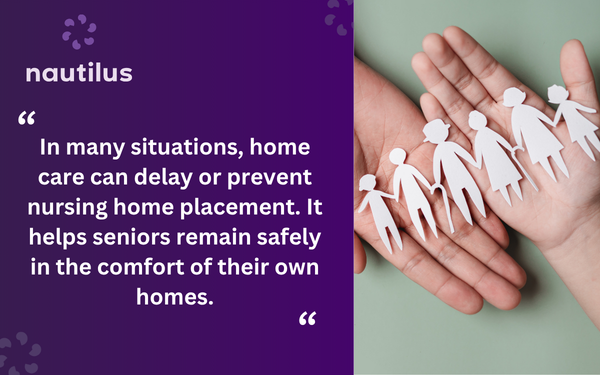
In many situations, home care can delay or prevent nursing home placement. It helps seniors remain safely in the comfort of their own homes.

​However, the answer may not be simple. Home care may not replace nursing homes in every situation. But it can change the timeline. Families have more time and control before making a decision.

Key Takeaways

  • Home care can often delay nursing home placement by helping seniors remain safe and independent at home.
  • Support with meals, bathing, medication reminders, housekeeping, and mobility reduces everyday safety risks.
  • Regular caregiver visits may help prevent falls, hospitalizations, and emergency situations.
  • Home care provides valuable respite for family caregivers, reducing burnout and allowing them to focus on quality time.
  • Remaining in a familiar home environment supports emotional well-being and cognitive stability.
  • Care plans are flexible and can gradually increase as a senior’s needs change.
  • Some situations—including advanced medical needs, severe dementia, or the need for 24/7 supervision—may require nursing home or memory care.
  • Planning for home care before a crisis gives families more options and makes future care transitions easier.

​

Why Staying at Home Matters to Seniors and Families

Most seniors don’t want to move to a facility. The reasons are rather emotional. Home represents familiarity. It holds memories and routines. It is a place where seniors feel independent. They feel most comfortable in a kitchen where they have cooked for decades. A home is more than just a place to live. It is part of their personal identity.​

For example, an elderly man has lived in the same apartment for 40 years. He struggles with short-term memory issues. But he still knows where his favorite chair is. And he remembers how to make his favorite tea.​

Imagine removing him from that familiar environment. This can create stress and confusion.​

Families often hope to delay nursing home placement. They want to preserve independence. Also, they hope their loved one maintains emotional stability this way.​

On top of that, families prefer personalized care. In facilities, caregivers are assigned to multiple residents. So the approach isn’t one-on-one. Within home care, the attention is focused on the senior and their needs.​

Also, families and seniors are often emotionally unprepared for a move.

Topic How Home Care Helps When Nursing Home Care May Be Needed
Daily Living Support Assistance with meals, bathing, medication reminders, housekeeping, and mobility helps seniors remain independent. Daily care needs become too extensive to manage safely at home.
Hospitalization Prevention Caregivers help reduce falls, monitor health changes, and encourage medication compliance. Frequent hospitalizations or serious health declines require ongoing medical supervision.
Family Caregiver Support Provides respite, reduces caregiver burnout, and allows families to focus on emotional connection. Family caregivers are no longer physically or emotionally able to provide care.
Routine & Cognitive Stability Maintains familiar surroundings, routines, and consistent caregiver relationships. Advanced dementia or behaviors create safety risks that require specialized care.
Personalized Care Care plans can expand gradually from companionship to personal care and overnight support. 24/7 supervision or complex care exceeds what home services can safely provide.
Emotional Well-Being Remaining at home preserves independence, identity, comfort, and quality of life. Safety and medical needs outweigh the emotional benefits of staying at home.
Planning Ahead Starting care early allows gradual adjustments, home safety improvements, and stronger caregiver relationships. Waiting until a crisis often limits available care options and speeds nursing home placement.

​

How Home Care Can Delay Nursing Home Placement

Home care provides a long-term support system. As needs change, the care plan adapts. This can help delay nursing home placement in a few different ways.

​

Supporting Daily Living

Often, the need for a nursing home isn’t sudden. The change happens gradually, often starting small. You may notice your loved one is forgetting meals or missing their medications. They may not feel safe getting in and out of the shower. They feel unsteady on their feet or have already fallen. Plus, they have no energy to keep up with housekeeping.

​Home care can step in before the situation becomes critical. A caregiver can visit a few times a week to help with meals, medication reminders, and bathing. Over time, the visits can increase.

This prevents crises that lead to early nursing home placement.

​

Reducing Hospitalizations and Emergency Situations

One of the most common reasons for entering a nursing home is a hospital stay. Falls, infections, or sudden health declines often result in hospitalization. After discharge, families realize they can’t manage care at home by themselves.

​Home care can reduce hospitalizations with fall prevention, medication reminders, monitoring changes in health, and mobility assistance.

​For example, a caregiver notices that the senior is becoming unsteady on their feet. They alert the family before a fall happens. This small intervention can help prevent a hospital visit.

​

Supporting Family Caregivers

Nursing home placement is one of the options when family members experience caregiver burnout. A spouse or adult child may start with full commitment to care. But over time, responsibilities grow.

​An in-home caregiver takes over some of the responsibilities. Even a few hours a day make a difference. This allows family caregivers to have time for themselves. They can sleep through the night, go to work, maintain their health, and take breaks without guilt.

​This doesn’t mean family members step away from caregiving. Families can focus on the emotional connection instead of the everyday tasks. When caregivers receive the support they need, seniors are more likely to remain at home safely.

​

Maintaining Routine and Cognitive Stability

Routine is very important, especially for seniors with memory challenges. Staying at home with support helps maintain sleep patterns, familiar surroundings, regular meals, and daily habits.

​For seniors, waking up in their own bedroom, eating breakfast in their kitchen, and seeing a familiar caregiver regularly helps with confusion.

​For example, a woman with early dementia becomes disoriented in unfamiliar settings. But she enjoys her morning coffee at her kitchen table independently. Home care helps preserve stability.

​

Personalized Attention

Home care is flexible and can adjust to changing needs. A care plan can begin with light support and gradually increase.

For example, a senior can get companionship visits and meal preparation. As their condition progresses, they can get personal care assistance, mobility support, or overnight care.

​

The Emotional Benefit of Staying at Home Longer

Home care goes beyond practical tasks. It supports emotional well-being, which helps delay nursing home placement.

​Seniors who remain at home often experience a stronger sense of identity. They feel less anxiety and confusion. Plus, they have more control over daily life.

​Consider an 85-year-old woman who still tends to her balcony plants. Her caregiver provides support. In a nursing home, she may no longer be able to enjoy this small daily activity that gives her a sense of purpose.

​Emotional stability often impacts physical health. Seniors who feel safe and oriented often sleep better, eat better, and remain active.

​

When Home Care Is No Longer Enough

Home care has many benefits, but it also has limits. At some point, safety and medical needs can’t be managed at home.

​

24/7 Supervision Is Required

If a senior can’t be left alone safely, this may mean they need more than home support. This includes situations like:

  • Wandering frequently
  • Forgetting to turn off appliances
  • Attempting unsafe movements without assistance
  • Becoming disoriented at night

​Even if there is someone present, continuous supervision at home may not be sustainable.

​

Advanced Mobility and Physical Needs

When a senior has advanced mobility needs, home care may no longer be enough. They may be totally dependent on transfers or experience frequent falls. Also, cases of severe weakness and paralysis require advanced assistance.

​

Complex Medical Care

Some conditions require skilled nursing support that goes beyond the standard home care. Things like advanced wound care, feeding tube management, and frequent medical monitoring require a nursing facility.

​

Behavioral or Cognitive Safety Risks

When dementia progresses, some behaviors may be difficult to manage at home. This may happen with other conditions as well. Behaviors like aggression, severe confusion, paranoia, wandering, and resistance to care require specialized memory care institutions.

​

Caregiver Burnout Reaches a Breaking Point

Sometimes, the transition happens because the family caregivers can’t do it anymore. They may be physically exhausted, emotionally overwhelmed, or have health issues. In such cases, home care may no longer be realistic.

​But it is important to understand home care as the first phase of care. It isn’t a failed solution. In many cases, it delays transition to a nursing home by months or years. The goal isn’t to avoid nursing homes at all costs, but to ensure comfort and safety for as long as possible.

​

Planning Ahead Makes Home Care More Successful

Many families wait until a crisis happens to look for some care options. They often call an in-home care agency after a fall, missed medication, or a hospitalization. But decisions need to be made quickly, leaving you fewer options.

​Starting home care early gives everyone time to adjust. The senior can build a relationship with their caregiver while still being independent. This makes it easier to accept help later when they need it. They won’t feel like a stranger has entered their home. The caregiver becomes a familiar face and trusted companion.

​Early planning also allows families to identify safety concerns. They can solve them before they become an emergency. For example, they can make home modifications, organize medications, and increase support gradually.

​For example, a senior needs help with grocery shopping and transportation. But their needs change, and they need more hands-on support. The services include assistance with bathing, meal preparation, and mobility. A care plan was already in place, so the services can be added without any disruptions.

​

Final Thoughts

Home care can delay nursing home placement for many seniors. It supports daily living, reduces emergencies, and helps preserve familiar routines.

​But home care also has limits. When care needs increase, families may need more structured support. The decision isn’t sudden. It builds over time with small changes in health and mobility.

​If you’re considering home care as an option, this is the right place to start. Contact us now and schedule a consultation.

Question Answer
Can home care prevent nursing home placement? In many cases, yes. Home care can delay or prevent nursing home placement by helping seniors safely manage daily activities and health needs at home.
What services does home care typically provide? Services may include personal care, meal preparation, medication reminders, companionship, housekeeping, transportation, and mobility assistance.
How does home care help family caregivers? Professional caregivers provide respite, reduce caregiver burnout, and allow family members to balance work, personal health, and caregiving responsibilities.
When is home care no longer enough? Home care may no longer be sufficient when a senior requires continuous supervision, complex medical care, advanced mobility assistance, or specialized memory care.
Should families start home care before it’s absolutely necessary? Yes. Starting early allows seniors to build trust with caregivers, makes gradual care adjustments easier, and helps families avoid making rushed decisions during emergencies.
Can home care services increase over time? Yes. Care plans are designed to be flexible, allowing services to expand from occasional companionship to more comprehensive personal and overnight care as needs evolve.

Can a Senior Stay at Home with Dementia?

​A dementia diagnosis changes everyday life. However, it doesn’t mean a senior needs to leave home. It turns out many older adults continue living at home years after the diagnosis. They require the right level of support.

​If you were wondering whether your loved one can stay at home, the answer is often yes. This is possible during the early and middle stages of dementia. But it requires supervision, practical help, and securing the home.

​The real point is that every person’s experience with dementia is different. Some seniors can remain independent for some time. Others may need everyday assistance. Families should focus on safety and comfort.

Key Takeaways
Many seniors with dementia can safely remain at home during the early and middle stages with proper support.
Familiar surroundings and daily routines can reduce confusion, anxiety, and emotional stress.
Professional in-home caregivers provide personalized assistance with personal care, meals, medication reminders, companionship, and household tasks.
Home care plans can be adjusted over time as dementia progresses and care needs increase.
Simple home safety modifications, such as grab bars, better lighting, and removing tripping hazards, help reduce risks.
Family caregivers benefit from professional support, allowing them to rest and spend more meaningful time with their loved one.
Frequent wandering, the need for 24-hour supervision, aggressive behaviors, or complex medical conditions may indicate that a higher level of care is needed.

​

Can a Senior Stay at Home with Dementia?

The home is a familiar environment. It provides the level of comfort no care facility can replace. A senior with dementia may not remember recent conversations. But they know where the kitchen is, recognize family photos, and enjoy sitting on the same porch. Staying in familiar surroundings helps reduce confusion.

​For example, an 80-year-old woman has lived in the same house for 35 years. She may forget what day it is or repeat the same story several times. But she smiles when she waters her flowers in the mornings. She enjoys having coffee in the same chair every day. Keeping these simple routines provides emotional stability. This becomes very important as dementia progresses.

​Remaining at home means the senior gets to stay close to family, neighbors, and friends. They keep the familiar daily routines and sleep in their own bed. Older adults can spend time with their beloved pets. And they can continue enjoying the hobbies they love.

Basically, they feel independent.

​As dementia progresses, stress and anxiety often increase. The familiar experiences can help reduce them.

Topic Key Information Why It Matters
Can Seniors Stay at Home? Many seniors with dementia can safely remain at home during the early and middle stages with appropriate support. Maintains independence while ensuring safety and quality of life.
Benefits of Staying Home Familiar surroundings, established routines, family, pets, neighbors, and favorite activities reduce confusion and anxiety. Supports emotional well-being and cognitive comfort.
In-Home Care Services Personal care, meal preparation, medication reminders, housekeeping, transportation, companionship, mobility assistance, and cognitive engagement. Provides personalized support while allowing seniors to remain at home.
Personalized Care Caregivers adapt routines and activities based on daily mood, preferences, and abilities. Improves comfort, engagement, and quality of life.
Reduced Confusion Remaining in a familiar environment avoids the stress of adapting to a new facility. Helps reduce anxiety and disorientation.
Consistent Routines Maintains familiar daily habits such as meals, walks, hobbies, and bedtime routines. Provides predictability and emotional stability.
One-on-One Attention Dedicated caregivers monitor changes in health, mood, appetite, and mobility. Allows early intervention and personalized care.
Supporting Independence Caregivers encourage participation in safe daily tasks like folding laundry, watering plants, or choosing clothing. Preserves confidence and sense of purpose.
Emotional Comfort Companionship through conversation, meals, family photos, music, and shared activities. Builds trust and reduces feelings of fear or isolation.
Benefits for Families Professional caregivers provide respite, allowing family members to rest and focus on meaningful time together. Reduces caregiver stress and burnout.
Flexible Care Plans Care can gradually increase as dementia progresses and needs change. Allows seniors to remain at home longer without major disruptions.
Home Safety Improvements Remove tripping hazards, install grab bars, improve lighting, secure medications, label cabinets, and use door alarms if needed. Reduces accidents while supporting independence.
When Home Care May Not Be Enough Frequent wandering, need for 24/7 supervision, aggressive behaviors, or complex medical conditions may require a higher level of care. Ensures the senior receives appropriate care when safety becomes a concern.
Overall Takeaway With family involvement, home modifications, and professional caregivers, many seniors can safely remain at home after a dementia diagnosis. Supports dignity, safety, and quality of life for as long as possible.

​

In-Home Care Helps Seniors Continue Living Safely

Home care provides professional assistance, so seniors can remain in their homes. Caregivers visit the home according to a defined care plan. Some families schedule a few hours per week. Others have daily visits or around-the-clock care. This depends on the senior’s needs.

​Support can look different for everyone. In-home care agencies often offer:

  • Personal hygiene and bathing assistance
  • Dressing and grooming
  • Meal preparation and hydration reminders
  • Medication reminders
  • Light housekeeping
  • Laundry
  • Grocery shopping
  • Transportation to appointments
  • Fall prevention
  • Mobility assistance
  • Companionship
  • Cognitive engagement through conversation, games, music, or simple activities
  • Monitoring for changes in health or behavior

​

Families can choose which services to add to the care plan. The best thing is that home care is flexible. When needs change, families can add more support.

​

The Benefits of In-Home Care for Seniors with Dementia

Home care focuses on the individual. One of the major benefits is the personalized approach. It adjusts to the individual’s needs, rather than forcing them into a facility’s schedule.

​The caregiver closely follows the mood and preferences. They can adjust each day based on how the senior is feeling.

​For example, someone wakes up anxious. The caregiver spends extra time providing reassurance. They don’t rush through routines.

​If a senior enjoys gardening, they can spend time tending flowers while being monitored. If they enjoy music, the caregiver ensures their favorite songs become part of the day’s activities.

​These meaningful activities help improve quality of life.

Less Confusion

Moving to a facility can be very disorienting for someone with dementia. Simple things like finding the bathroom, recognizing hallways, or remembering where personal belongings are kept may feel stressful.

​Remaining at home prevents many of these challenges. The surroundings are already familiar.

​

Consistent Daily Routines

Seniors with dementia often thrive on familiar routines. The daily structure helps reduce anxiety. Things like waking up at the same time, eating familiar meals, watching a favorite TV show, or taking a walk provide comfort.

​In a facility, these routines will be replaced with new ones. This may cause confusion.

​So that’s why professional caregivers help preserve the senior’s routines with encouragement and gentle reminders. They don’t replace them.

​

One-on-One Attention

In a facility, caregivers are assigned to multiple residents. So they can’t provide the one-on-one attention they need.

​An in-home caregiver focuses on one individual. They can notice changes in mood, appetite, or mobility early. They can then report these changes to family members and healthcare providers to prevent issues from worsening.

​

Greater Independence

Many seniors are afraid of losing their independence. But home care supports it rather than taking it away. And this is seen through how everyday tasks are done. The caregiver doesn’t take over fully. Instead of completing every task for the senior, they often encourage participation whenever it is safe.

​For example, the senior can fold towels. They can prepare the ingredients for lunch. Watering the plants is another example. And they can choose their outfit for the day. These small activities help preserve their confidence and provide a sense of purpose.

​

Emotional Comfort

For seniors, living with dementia can be frightening. They can recognize the memory changes but may not be able to explain them. Having a familiar face provides reassurance, which creates trust and emotional security.

​Comfort comes from simple moments. Sharing a meal, talking about childhood memories, looking through family photo albums, or sitting together on the porch help seniors feel connected.

​

Relief for Family Caregivers

We understand that caring for a loved one with dementia is rewarding. It is an act of love and devotion. But it can also be exhausting. Family caregivers often experience emotional stress, poor sleep, and fatigue. They balance full-time jobs and other personal responsibilities.

​Professional caregivers provide consistent support so spouses or adult children can rest. They can have time for their appointments or spend time with their own families. Ultimately, they can enjoy being a son, daughter, or spouse instead of a full-time caregiver.

​Many families say they can finally enjoy quality time together. They can have meaningful conversations and special moments again because someone else is helping with the daily caregiving responsibilities.

​

A Care Plan That Changes Over Time

Dementia doesn’t stay the same. Someone may need companionship and supervision today. But over time, they may require help with dressing, bathing, eating, or walking.

​In-home care is flexible and responds to changes. Families can increase the number of hours or add services. They don’t have to make major life changes. The gradual approach feels less overwhelming for the senior and the family.

​

Making the Home Safer

Home care helps create a safer living environment. The home care agency does an assessment to find risks. Then they recommend simple adjustments to improve safety.

​This can look like removing loose rugs that could cause falls. Or installing grab bars in the bathroom. Improving the lighting throughout the home is another fix that can improve safety.

​For some seniors, locking away medication and cleaning supplies is necessary. Or using automatic shut-off devices for stoves.

​For convenience, they may recommend placing labels on cabinets and doors. Plus, keeping frequently used items within easy reach helps avoid confusion. If wandering worries you, installing door alarms is an option.

​The small updates help support independence and safety.

​

When Home Care May No Longer Be Safe

Many seniors remain at home safely for years. But at a certain point, this may no longer be an option.

​The decisions come with feelings of guilt. Family members may think they somehow failed their loved one. But in reality, dementia changes over time. And this means that needs will increase.

​There are several signs that may indicate staying at home is no longer safe.

​

Frequent Wandering

A senior who starts leaving home without telling anyone or becoming lost is a serious risk. They may not recognize familiar faces like neighbors.

​When wandering continues despite the safety measures, it is time to consider a higher level of care.

​

Around-the-Clock Supervision Is Needed

When dementia progresses , seniors can’t be left alone. Even doing this for shorter periods can be risky. For example, they may forget the food that is cooking on the stove. They leave the water running. They may unlock doors at night. Misusing medication is another problem common in seniors with dementia.

​This means that constant supervision is needed. When the family can’t provide it, remaining at home is no longer safe.

​

Aggressive or Unsafe Behaviors

Some individuals may develop behavior that is unsafe for them and others. This may include physical aggression, severe agitation, or resistance to essential care. This may need specialized dementia care.

​

Complex Medical Needs

As dementia advances, seniors may experience other health issues. Swallowing difficulties, severe mobility limitations, recurring infections, or other medical conditions requiring skilled nursing support.

​

Final Thoughts

A dementia diagnosis doesn’t have to mean the senior should immediately leave home. With planning, family involvement, home modifications, and professional caregivers, seniors can remain in their homes safely.

​If you have any questions regarding in-home care, contact us and schedule a consultation.

Question Answer
Can a person with dementia continue living at home? Yes. Many seniors with dementia can safely remain at home during the early and middle stages with family support, home modifications, and professional caregiving.
What services does in-home dementia care include? Services commonly include personal care, meal preparation, medication reminders, housekeeping, transportation, companionship, mobility assistance, and cognitive engagement.
Why is staying at home beneficial for someone with dementia? A familiar environment helps reduce confusion, supports daily routines, and provides emotional comfort through familiar people, belongings, and activities.
How can families make the home safer for someone with dementia? Removing tripping hazards, installing grab bars, improving lighting, securing medications, labeling cabinets, and adding door alarms are common safety improvements.
When is it no longer safe for someone with dementia to remain at home? A higher level of care may be needed if the senior frequently wanders, requires constant supervision, develops unsafe behaviors, or has complex medical needs.
How does in-home care benefit family caregivers? Professional caregivers reduce caregiver stress by assisting with daily responsibilities, giving family members time to rest, work, and enjoy meaningful moments with their loved one.

How Does In-Home Care Work

If you have never arranged for in-home care before, you must have a lot of questions. Many people have heard the term, but may not be sure what it really means.

But home care is much simpler than you may expect. It brings support to an individual’s home, allowing them to stay comfortable.

Families get home care for aging parents. Or to help them during the recovery period after a surgery. We explain how home care works in simple words.

Key Takeaway Explanation
Home Care Is Personalized Services are tailored to each individual’s health, routines, and preferences.
Care Plans Adapt Over Time Schedules and services can be modified as needs change.
Caregivers Support Daily Living Assistance may include personal care, meals, housekeeping, transportation, and companionship.
Scheduling Is Flexible Families can arrange short-term, part-time, full-time, or overnight care.
Families Remain Involved Home care supports family involvement rather than replacing it.
Home Care Promotes Independence Clients can remain in familiar surroundings while receiving the support they need.

In-Home Care Starts With Understanding What Help Is Needed

Every person’s situation is different. That’s why home care isn’t a one-size-fits-all option. It is flexible and can adjust to your specific situation.

Some people need help with a few tasks per week. Others require daily support with eating, getting dressed, and personal hygiene.

Before care begins, you and the agency sit down to discuss the situation. You work together to find out what level of assistance is needed. The conversation is relaxed and supportive.

For example, an 82-year-old woman moves independently around the home. She still cooks and does gardening. But she gets tired easily. So she struggles with grocery shopping, laundry, and transportation. In this case, a caregiver visits a few times per week to help with these tasks.

Another person is recovering from surgery. They need help getting dressed, preparing meals, and moving around the home. After a few weeks, they fully recover and no longer need hands-on support.

Feel free to share small details. This helps the agency tailor the approach. They will understand where support is needed and how often.

Home Care Process What Happens Benefits to the Client & Family
Needs Assessment The family and agency discuss daily challenges, health concerns, routines, and support requirements. Ensures services are tailored to the individual’s specific needs.
Personalized Care Plan A written plan outlines services, schedules, routines, and personal preferences. Provides consistent, individualized care and can be adjusted as needs change.
Personal Care Assistance Help with bathing, dressing, grooming, mobility, and toileting. Promotes safety, comfort, and independence.
Household Support Includes meal preparation, laundry, light housekeeping, and errands. Reduces daily stress and helps maintain a clean, safe environment.
Medication Reminders Caregivers remind clients to take medications as scheduled. Supports treatment adherence and daily health management.
Transportation Assistance Transportation to medical appointments, errands, and community activities. Helps clients stay active and attend important appointments.
Companionship Conversation, games, social interaction, and emotional support. Reduces loneliness and improves emotional well-being.
Flexible Scheduling Care can be arranged for a few hours weekly, daily visits, overnight care, or temporary recovery support. Allows families to increase or decrease support as needs evolve.
Professional Caregivers Services are provided by trained caregivers, home health aides, or nursing assistants. Ensures safe, reliable support for daily living activities.
Family Involvement Families communicate regularly with caregivers and participate in care decisions. Creates a collaborative approach while reducing caregiver stress.
Aging in Place Clients remain in their own homes while receiving support. Preserves independence, familiar routines, and quality of life.

A Care Plan Is Created Around the Individual

Once you have talked about the needs with the agency, they create a care plan. This is a written plan for the caregiver. It tells them which services to provide, how often to visit, the client’s routines, and preferences.

This is very important for delivering the best care. For example, the family shares how their loved one likes their breakfast. The caregiver follows this, as this helps build trust and comfort.

A care plan can include:

  • Assistance with bathing and dressing
  • Meal preparation
  • Medication reminders
  • Light housekeeping
  • Transportation to appointments
  • Companionship and social interaction

Needs don’t stay the same. So the care plan can adapt to the changes over time. This means that the services and schedule are adjusted to the new situation.

This type of flexibility is why many families choose home care.

What Happens During a Typical Caregiver Visit?

A typical visit depends on the person’s needs. The caregiver provides support during everyday tasks.

For example, a caregiver arrives for the morning shift. They help the client get out of bed, help with bathing, and get dressed. Then they prepare a nutritious breakfast and remind them to take their medication.

Later in the day, they help with light housekeeping. They tidy the house and clean up the kitchen. Or they take the person to a doctor’s appointment.

Care can look different for another client. The visit focuses on companionship. The caregiver checks in, spends time talking, and plays cards. Their presence helps reduce loneliness and isolation,which is common among seniors.

These tasks may seem small. But they help people remain safe and supported while enjoying the comfort of their home.

How Scheduling Works

One of the biggest advantages of in-home care is flexibility. You can arrange care for as many hours as you need. Some need a few hours each week. Others need several hours per day or overnight support.

Agencies are flexible to accommodate your needs. For example, a family starts with visits every Tuesday and Thursday afternoon to help with errands and housekeeping.

A few months later, the person needs more support due to a stroke. The schedule has changed, and now they have daily visits.

Another thing we want to highlight is the importance of short-term care. Families usually arrange this after an illness, injury, or surgery.

Here’s the thing: there is no pressure to commit. The schedule is built around the client’s needs. There is no pressure to adapt to a facility’s routine..

Who Provides the Care?

In-home care is usually provided by trained caregivers, home health aides, or nursing assistants. They have the required certification to perform services safely.

Many caregivers focus on non-medical assistance that includes personal care, meal preparation, housekeeping, transportation, and companionship.

For example, a nurse is visiting regularly to monitor a health condition and manage treatments. The caregiver helps with daily routines such as bathing, cooking, and toileting.

Care can be provided by a private caregiver or an agency. Families often choose to work with a licensed home care agency. The agency handles caregiver screening, background checks, scheduling, and supervision.

Otherwise, families must handle all administrative tasks themselves. An agency takes care of this and makes the process easier.

How Families Stay Involved

For many families, arranging in-home care makes them feel guilty. They feel like they step out. But in reality, families stay involved in more meaningful ways.

Caregivers and family members often work together to ensure that the person gets the best possible support. Families constantly communicate with the caregivers about changes and concerns.

Ultimately, many find out that in-home care actually improves the relationship with their loved one. Family members won’t spend every visit on practical tasks. Instead, they can spend quality time together.

A daughter spent every weekend cleaning, shopping, and managing medications. Things were too exhausting because she had a full-time job. She arranged home care so someone else would help with those. She finally has time to sit down, share a meal, and enjoy meaningful conversations with her mother.

What Makes In-Home Care Different From Other Care Options?

When families start looking for care, they come across different options. These include in-home care, assisted living, and nursing homes. All of them include help with everyday life, but have significant differences.

The biggest difference is where care happens and how much independence they can keep.

With in-home care, the caregiver comes to the person’s home. The client stays in familiar surroundings. They can sleep in their own bed, use their own kitchen, and use their favorite cup. They can continue with their normal routines.

In assisted living or nursing homes, the person moves into a facility where care is provided on-site. For many, this feels disruptive. Being in an unfamiliar environment and being surrounded by unfamiliar faces can be stressful.

Imagine an older adult who has lived in the same house for 40 years. Their home is filled with familiar furniture, photos, neighbors, and routines. Moving means losing a part of themselves and their identity.

The care is personalized

The in-home care plan is built around the person’s needs. In facilities, there is a general schedule for all the residents. Waking up and having meals at a fixed time feels like losing one’s independence. Staff care for many residents at a time.

The in-home caregiver adjusts the approach based on the client’s needs and preferences. They work at their own pace.

Families stay more involved

With in-home care, the families can stay involved in the person’s daily life. They can also participate in care decisions. Family members communicate directly with caregivers and stay informed about any changes in health or routines.

This approach feels more collaborative and personal. In a facility, family members may have a set time for visits. Also, they aren’t involved in decisions.

It can support independence longer

Losing independence is stressful for seniors. And moving to a facility feels like taking away their independence. But they don’t have to move immediately. They can receive help with the specific tasks that are difficult.

For example, a senior manages most of their day independently. But they need help with cooking, housekeeping, and transportation. This type of support allows them to live safely at home for years.

Also, reassurance is important for families. Knowing that someone is regularly checking on a loved one provides peace of mind.

Final Thoughts

Home care isn’t just a list of services. It improves quality of life while allowing seniors to remain at home for as long as possible. The process begins with an assessment, customized care plan, caregiver matching, and flexible schedule.

If your loved one needs help, now is the right time to look for the right option. It doesn’t matter if they need a few hours per week or daily assistance. Home care is flexible and can be adjusted to your needs.

To understand your options, contact us now and schedule a consultation.

Question Answer
How does in-home care work? Home care begins with an assessment, followed by a personalized care plan and caregiver support provided in the client’s home.
What services can an in-home caregiver provide? Services may include personal care, meal preparation, medication reminders, housekeeping, transportation, and companionship.
How often can caregivers visit? Visits can be scheduled for a few hours per week, daily support, overnight care, or temporary recovery assistance.
Who provides in-home care services? Care is typically provided by trained caregivers, home health aides, or nursing assistants.
Can the care plan be changed later? Yes. Care plans are designed to evolve as the client’s health and support needs change.
How are families involved in the care process? Families communicate with caregivers, receive updates, and participate in care decisions.
How is home care different from assisted living? Home care allows individuals to remain in their own homes, while assisted living requires moving into a care facility.
Why do families choose in-home care? Many families value the personalized care, flexibility, independence, and comfort of remaining at home.

How To Qualify For In-Home Care

Your loved one may be struggling with everyday routines. They may miss medications, feel too tired to cook meals, or be worried about falls. Or, they need additional support after a surgery or illness. At this point, many families consider home care.

​Qualifying for in-home care is one of the biggest questions. The answer depends on what type of care you need. For families that pay privately, qualification is straightforward. But if you’re seeking coverage through insurance, you will have to check additional requirements.

​Understanding how to qualify for in-home care helps you determine the next steps. In this guide, we explain everything in detail.

Key Takeaway Explanation
Eligibility Depends on the Type of Coverage Qualification requirements vary between Medicare, Medicaid, long-term care insurance, veterans benefits, and private pay arrangements.
Medicare Covers Limited Home Care Services Medicare generally covers short-term, medically necessary home health services but not long-term custodial care.
Medicaid May Cover Long-Term Care Eligibility is based on state-specific rules, financial criteria, and the individual’s need for assistance with daily activities.
Private Pay Offers the Most Flexibility Families can start care immediately, customize schedules, and adjust services without approval requirements.
Care Can Start Small and Expand Later Many families begin with a few weekly visits and increase support as needs change over time.
An Assessment Helps Determine Care Needs A home care assessment evaluates daily routines, mobility, safety concerns, and the level of assistance required.
Not Qualifying for Assistance Doesn’t Eliminate Options Families can use private pay, part-time care, or a combination of family support and professional caregiving.

​

How to Qualify For In-home Care?

The cost for in-home care can quickly go up. Especially if your loved one needs hands-on support. The hourly rate ranges from $25 to $44. The national average is $34 per hour. But the total cost you pay depends on the needs and hours included.

​Many families want to know if they qualify for financial help. Financial assistance programs often have specific eligibility requirements.

​

Medicare

Medicare doesn’t cover long-term in-home care. It covers short-term services that are medically necessary. Also, a doctor needs to verify that the person needs them. This is often the case after a hospitalization, surgery, or illness.

​For example, a person is recovering from a stroke. They need help during recovery because they can’t manage daily tasks on their own. They may qualify for temporary home health services, including nursing care or therapy visits, while they recover at home.

​But Medicare doesn’t cover long-term custodial care. This includes help with bathing, housekeeping, or meal preparation.

Care Option Qualification Requirements Coverage / Benefits Key Considerations
Medicare Doctor must verify a medical need following illness, surgery, hospitalization, or injury. Short-term home health services such as nursing care and therapy. Does not typically cover long-term custodial care, meal preparation, or housekeeping.
Medicaid Based on state-specific rules, income, assets, and functional limitations. May cover long-term in-home care and ongoing support services. Eligibility requirements vary significantly by state.
Long-Term Care Insurance Typically requires assistance with at least two Activities of Daily Living (ADLs). Home care services covered according to policy terms. Benefits and waiting periods vary by policy.
Veterans Benefits Veteran or surviving spouse status with program-specific requirements. May help cover some or all in-home care expenses. Individuals may qualify for multiple veterans programs.
Private Pay No formal eligibility requirements. Immediate access to customized home care services. Offers maximum flexibility, control, and faster care arrangements.
Care Assessment Evaluation of daily routines, mobility, memory, and safety concerns. Determines the appropriate level of support and services. Often the first step when arranging home care.
Part-Time Care Suitable for individuals needing limited assistance. Support with meals, errands, housekeeping, and companionship. Can help reduce costs while maintaining independence.
Agency-Based Care Available once care needs are identified and services are arranged. Professional caregiver placement, scheduling, and ongoing support. Agency handles screening, payroll, and backup coverage.

​

Medicaid

The situation is different with Medicaid programs. They may cover long-term in-home care when eligible. Qualifications depend on needs and financial eligibility.

​Each state has its own rules for in-home care coverage. But keep in mind that programs often consider income, assets, and the individual’s ability to perform daily activities independently.

​For many seniors and individuals with disabilities, Medicaid can cover ongoing support to help them remain at home instead of moving to a facility.

​

Long-Term Care Insurance

Some long-term care insurance policies cover home care services. Still, this depends on the individual policy. Benefits usually start when the person requires assistance with daily activities.

The ADLs or activities of daily living include bathing, dressing, moving around, transferring, eating, and toileting.

​A person is eligible for in-home care coverage when they can’t do at least two of these. Make sure to check in with your provider to understand your benefits and eligibility.

​

Veterans Benefits

Veterans and surviving spouses may qualify for home care through veterans’ programs. These benefits can cover some of the costs. Every program has different requirements, so get in touch with VA to understand more.

​Don’t forget that you may qualify for more than one program. This helps get better coverage and makes in-home care services more manageable.

​

Private Pay In-Home Care

Private pay is the easiest way to arrange in-home care. It is a common option for families who need help quickly or don’t qualify for government assistance programs.

​Private pay means families pay for care out of pocket. They have two options: hiring an independent caregiver or working with an agency. There are no strict eligibility rules, no waiting lists, and no medical approvals required.

​If someone needs help at home, it can start when the family is ready. Plus, you can start with hours and services that feel reasonable. There is no pressure for commitment.

​

Flexibility

The flexibility is one of the main reasons families go for private pay. For example, an elderly parent begins struggling with daily tasks like cooking, bathing, or remembering medications. The family doesn’t have to wait for insurance approval. They can contact an in-home care agency and get informed about the process.

​They request an assessment and arrange care. This can happen within a few days or sooner. How long it takes to start care depends on caregiver availability.

​

Control

While families can get service quickly, they have full control over everything. They can start small to see how their loved one adjusts. A caregiver can visit two or three times a week for meal preparation, housekeeping, and companionship. If needs increase, they can add more hours.

​For example, a daughter caring for her mother arranges assistance twice per week. After a few months, she notices her mother is becoming more forgetful and less steady on her feet. This is a clear sign she needs more help.

​Instead of going through a complicated approval process, she simply calls the agency. They update the care plan and increase visits to daily support.

​

Choice

Government assistance programs impose limitations when it comes to in-home care. They have strict program rules, approved providers, and services.

​With private pay, families have the freedom to choose. They can pick the agency caregiver, schedule, and services that best fit their needs.

​The important thing to remember is that private pay doesn’t mean lower-quality care. Many families prefer it because it provides faster access to care and easier adjustments.

​

What If You Don’t Qualify for Financial Assistance?

Not everyone will qualify for Medicare, Medicaid, or other financial assistance programs for in-home care. This is a common situation for many families. They are surprised to learn that even when it is obvious that a loved one does need help, they may not meet the strict criteria. The requirements for coverage can be either financial or medical.

​For example, a family may find that their mother does not qualify for Medicaid because her income is slightly above the limit. But she is struggling with daily tasks like cooking, cleaning, and remembering medications. In this situation, the family can hire a caregiver and cover the cost out of pocket.

​Another option for families is starting small. In-home care does not need to begin as full-time support. A few visits per week, when help is needed the most, can help. This makes care more affordable.

​For example, an elderly man lives alone. He doesn’t need daily care but needs help with groceries, meal preparation, and light housekeeping. The caregiver comes three times per week to help with these tasks.

​Some families also combine different approaches. They may rely on family members for part of the care while using a caregiver for tasks that are harder to manage. This helps reduce cost while providing consistent support.

​Ultimately, needs can change over time. A person may not qualify for assistance today, but they may become eligible in the future when health conditions change.

​

Taking the First Step Toward In-Home Care

The decision to start in-home care is often the hardest part of the process. Most families begin when there is a safety concern or a decline in daily function. We break down the process in a few simple steps so it feels more manageable.

​

Recognizing When It’s Time to Act

A series of small moments may indicate your loved one needs help. For example, a daughter notices her father wears the same clothes repeatedly. Or a routine doctor visit reveals missed medications.

​Families will first try to manage everything. They visit more often, help with groceries, and pay bills. But over time, it is clear that this type of help isn’t enough.

​If your loved one can’t manage daily life safely, it is time to explore care options.

​

Starting With a Care Assessment

When you have already made the decision, it is time to contact a reputable home care agency and arrange an assessment. This is not a medical exam. Basically, the agency assesses daily needs and living conditions. A care coordinator asks about routines, mobility, memory, personal care, and safety concerns in the home.

​Home safety is very important. Things like cluttered walkways, stairs, or a lack of safety equipment can influence the care plan.

​

Understanding What Level of Care Is Needed

Some people need light support. So the agency arranges visits a few times per week. Others need daily assistance with personal care like bathing, dressing, and mobility.

​For example, an older woman living alone needs help in the mornings. Meanwhile, someone recovering from surgery might need several hours of support each day until they regain strength.

​

Choosing How to Arrange Care

​

Once needs are clear, families usually choose between two main options: hiring through a home care agency or arranging private care.

​Agencies make the process easier. They handle the screening, scheduling, payroll, and backup coverage.

​

Final Thoughts

Not qualifying for assistance programs doesn’t have to stop you from getting in-home care. Instead, shift the focus towards flexible solutions. Families still have realistic options, so their loved one gets the help they need.

​If you want to explore your options, contact us today. We will schedule a free consultation for you.

Question Answer
Who qualifies for in-home care? Anyone who needs assistance with daily living activities may arrange in-home care. Eligibility requirements only apply when seeking financial assistance or insurance coverage.
Does Medicare pay for in-home care? Medicare may cover short-term, medically necessary home health services following an illness, injury, hospitalization, or surgery. It generally does not cover long-term personal care services.
How do I qualify for Medicaid-funded home care? Qualification depends on your state’s rules, income and asset limits, and the individual’s need for assistance with daily activities.
What are activities of daily living (ADLs)? ADLs typically include bathing, dressing, eating, toileting, transferring, and mobility. Many insurance policies use ADLs to determine eligibility for benefits.
Can I get home care if I don’t qualify for Medicare or Medicaid? Yes. Many families use private pay arrangements to access home care services without waiting for approvals or meeting government eligibility requirements.
How quickly can private-pay home care begin? Care can often begin within a few days, depending on caregiver availability and the completion of the initial assessment.
What happens during a home care assessment? A care coordinator reviews daily routines, mobility, memory concerns, personal care needs, and home safety factors to create an appropriate care plan.
Can care services be adjusted over time? Yes. Home care plans are flexible and can be updated as health conditions, schedules, or support needs change.
Should I hire a private caregiver or use a home care agency? Home care agencies handle caregiver screening, scheduling, payroll, and backup coverage, while private hiring offers more direct control but requires greater management by the family.
What are the signs that it’s time to consider in-home care? Missed medications, difficulty preparing meals, increased fall risk, memory issues, poor hygiene, or trouble managing household tasks are common indicators.

How to get in-home care

If you’re caring for someone who is recovering from a surgery, deals with chronic conditions, or has difficulties due to aging, you know the struggle. In-home care provides the needed support when daily tasks become difficult. It allows seniors to stay comfortable and safe at home.

​Many families know they need help, but they may not be sure about where to start. There are a lot of things to consider, such as cost, caregiver qualifications, insurance coverage, and finding a trusted agency. These make the process overwhelming.

​The real point is that arranging home care is simpler than you might expect. We share a detailed guide that will help you navigate your situation.

Key Takeaway Explanation
Start With a Care Needs Assessment Understanding daily challenges and required assistance helps determine the appropriate level of care and caregiver qualifications.
Explore All Payment Options Private pay, long-term care insurance, Medicare, Medicaid, and veterans benefits may help cover costs depending on eligibility.
Choose the Right Hiring Approach Families can hire independently for more control or work with an agency for convenience and ongoing support.
Care Plans Should Be Personalized A customized care plan ensures services, schedules, and caregiver responsibilities match the client’s needs.
Communication Is Essential Regular communication with caregivers and agencies helps adjust care as needs change over time.
Home Care Supports Family Involvement Professional caregivers provide assistance while allowing families to focus on spending meaningful time with loved ones.

​

Assess Your Specific Care Needs

The first step is to understand exactly what you need. The level of care needed determines the cost, schedule, and caregiver qualifications.

​Start by noticing the daily activities that have become difficult. For some people, needs are simple. An older adult is independent, but they need help with grocery shopping and cooking. Others may need housekeeping and transportation to appointments.

​

Or, you have noticed unpaid bills, spoiled groceries in the fridge, and the house isn’t as tidy as usual. Services would include light housekeeping, help with errands, and preparing meals.

​Some individuals require more involved care that includes bathing, dressing, toileting, or mobility.

​Still, some need specialized support. A person with dementia needs supervision throughout the day. This ensures safety.

​Someone recovering from surgery may need assistance for a few weeks.

​Creating a list of the things your loved one needs help with is crucial for the consultation process. Agencies can better understand your situation and offer the support that fits your needs.

Stage Key Details Examples / Considerations
Assess Care Needs Identify daily activities that require assistance. Meal preparation, housekeeping, transportation, bathing, dressing, mobility support, dementia supervision.
Understand Costs Costs depend on location, care hours, service level, and specialized support. Compare payment methods and available benefits.
Private Pay Families pay directly for services. Maximum flexibility in caregiver selection and scheduling.
Long-Term Care Insurance May cover home care services depending on the policy. Review benefits and verify coverage with the insurer.
Medicare & Medicaid Coverage varies based on eligibility and medical necessity. Medicare generally covers medically necessary services; Medicaid varies by state.
Veterans Benefits Financial assistance may be available for veterans and spouses. Explore multiple veteran support programs.
Private Caregiver Often lower cost with full hiring control. Families handle recruiting, screening, taxes, scheduling, and backups.
Home Care Agency Agency manages caregiver hiring, training, and scheduling. Provides ongoing support and caregiver replacements when needed.
Research Agencies Review agency reputation and client feedback. Focus on communication quality and service experience.
Consultation Discuss health conditions, schedules, and care requirements. Most agencies offer free consultations.
In-Home Assessment Evaluate living conditions, mobility, and safety concerns. Opportunity to clarify expectations and ask questions.
Personalized Care Plan Customized outline of services, schedules, and responsibilities. Includes personal preferences and special instructions.
Caregiver Matching Match based on skills, experience, and personality. Families can request changes if needed.
Ongoing Communication Regular updates and adjustments to care plans. Care can increase as needs evolve.
Common Challenges Emotional concerns and family disagreements are common. Address guilt, communication gaps, and differing opinions proactively.

​

Understand the Cost of In-Home Care and Payment Options

Cost is often the biggest concern. The price for in-home care varies depending on location, the number of hours needed, the level of care required, and whether specialized services are involved.

​When it comes to funding, families have different options.

​

Private Pay

Many families pay for care themselves. This allows maximum flexibility, as you can choose the caregiver, schedule, and services that fit your needs. Insurance companies limit your provider options because they only work with approved agencies.

​

Long-Term Care Insurance

Long-term insurance policies may cover home care. But coverage varies significantly. It turns out you need to review your benefits and contact your insurance company to understand what’s covered. They may not cover all in-home care services.

​

Medicare and Medicaid

Medicare covers home health services only when medically necessary. Continuous support isn’t covered.

​Medicaid programs may offer assistance if eligibility requirements are met. The benefits vary by state.

​

Veterans Benefits

Veterans and their spouses may qualify for benefits that help cover in-home care. There are different veterans’ programs, and you may be eligible for more than one.

​

Decide Between Hiring a Private Caregiver or Working With a Home Care Agency

When families understand their budget and needs, next comes deciding who to hire. You have two options: independent caregivers or a licensed home care agency.

​Both have advantages. Hiring a private caregiver costs less. There is no agency fee, and you have full control over caregiver selection.

​Here’s the thing: it comes with additional responsibilities. Families will handle the whole process from start to finish. They find candidates, do the screening, background checks, interviews, schedule, taxes, and find a replacement if they are unavailable.

​Often, caregiving is exhausting for family members, and they have no time to do all of this.

​Working with a licensed home care agency is often easier. Families are supported throughout the whole process.

​Agencies complete the interviews, screening, qualification verification, background checks, training, and manage scheduling. If a caregiver is unavailable, they are responsible for finding a replacement.

​For many, choosing an agency is a more practical choice. For example, a daughter wants to arrange care for her aging father. She is working full-time and has a family, so she has no time for the administrative tasks. She hires a local in-home care agency. They handle the process, and she contacts them for everything.

​

How to Get In-home Care

​

Research

Since agencies guide families through the process, they are often the first choice. The first step is finding a reputable agency in your area. Do a quick search online and check the reviews. Look for more beyond the star rating. Read the comments to find out more about their communication and experience. This allows you to understand how they serve their clients.

​

Consultation

Once you have selected a few home care agencies, schedule consultations. Most will offer a free consultation, where they discuss your situation with you. They will also take time to explain their services and costs.

​Be prepared to share details about your loved one’s health condition, daily challenges, care needs, preferred schedule, and special requirements.

​During this stage, assess their style of communication. The agency coordinator should be attentive and not rush over the important details.

​

In-home Care Assessment

After the initial consultation, you know which agency will be your choice. The next step is scheduling an in-home care assessment. They will evaluate the client’s living environment, mobility, safety concerns, and level of assistance required.

​At this point, feel free to ask any questions. You can discuss the expectations.

​

Personalized Care Plan

After the assessment, the agency creates a care plan. It fully aligns with your needs and expectations. It outlines the services provided, the schedule, caregiver responsibilities, and instructions. They will also include any special preferences.

​

Matching

The in-home care agency uses the available information to find the right caregiver. The skills, experience, and personality need to be a good fit. A caregiver is present in the person’s life, and compatibility matters.

​Families can request adjustments if the caregiver isn’t the right match. For example, an aging parent is an extroverted person who loves social interactions. The agency matches them with a caregiver with the same dynamics. The companionship services focus on conversations and playing card games.

​The first visit is very important. Naturally, the client may still feel hesitant. But with time, this will be replaced by mutual trust.

​Pay attention to how your loved one responds to them. They should feel comfortable with the caregiver. Another thing to keep in mind is improvement. See how their quality of life improves with home care. For example, a client was struggling with meals. They skipped meals because cooking was tiring. Now, the caregiver prepares nutritious meals, and they eat regularly.

​

Continuous Communication

The process doesn’t stop after finding the right caregiver. Services begin, and the agency maintains regular communication. You can check in with the caregiver anytime.

​As needs change, the plan can be adjusted. For example, the client’s memory-related condition progresses. The family and agency agree that they need full-time supervision.

​

Common Challenges When Arranging In-Home Care

Arranging home care isn’t an easy decision. It is emotional and personal. Many families go through the same challenges before they find the option that works.

​Guilt is one of the strongest emotions. Many adult children feel guilty letting another person take care of their loved one. Even though they are tired. Often, families juggle work, child care, or live in another state. The idea of arranging home care may feel like stepping back from their responsibility.

​But getting a caregiver isn’t replacing family involvement. You can have peace of mind knowing your loved one is safe and comfortable. Now, you can spend quality time with them instead of doing practical tasks.

​For example, a daughter lives out of town and visits her mother on weekends. She helps with groceries and cleaning. But her mother needs everyday assistance. At first, she felt guilty because she couldn’t offer daily help. But she realized that her mother would be supported every day, not just on visits.

​Others may struggle with family disagreement. Siblings may approach this issue differently. One may believe the parent is still managing everyday tasks well. For them, getting help is unnecessary at this point.

​Another might feel that care should start immediately. They noticed mobility issues and were worried about falls. At this point, conversations may be tense.

​

Final Thoughts

In-home care is a major decision for families. But breaking it down to simple steps helps make the process less overwhelming. Analyze your situation and identify the type of help you need. Speak with your agency and listen to their suggestions.

​If your family member needs help, we are here to assist. Contact us now and schedule your consultation.

Question Answer
How do I know if my loved one needs in-home care? Signs include difficulty with daily activities, missed meals, unpaid bills, poor housekeeping, mobility challenges, or increasing safety concerns.
What services can in-home caregivers provide? Services may include companionship, meal preparation, housekeeping, transportation, personal care, medication reminders, and dementia support.
Does Medicare pay for in-home care? Medicare generally covers medically necessary home health services but does not typically pay for ongoing non-medical personal care or companionship services.
Is it better to hire a private caregiver or a home care agency? Private caregivers may cost less, while agencies handle screening, training, scheduling, and caregiver replacements, making the process easier for families.
What happens during an in-home care assessment? The agency evaluates the client’s living environment, health condition, mobility, safety concerns, and level of assistance required.
Can a care plan be changed later? Yes. Care plans are flexible and can be adjusted as health conditions, schedules, or care needs evolve.
How long does it take to arrange in-home care? The timeline varies, but many agencies can complete consultations, assessments, and caregiver matching within a few days.
What if the caregiver is not a good fit? Families can communicate concerns with the agency and request a different caregiver if necessary.

Home Care for Autistic Older Adults

Many people often associate autism with children. But it doesn’t disappear with age. Many older adults live with autism because they weren’t diagnosed when they were younger.

​This happens because in the past, autism wasn’t understood like today. People who struggle socially or feel overwhelmed in busy places have been called shy or difficult.

​Many adults have tried to fit in without understanding why some things felt harder. Autism in older adults is valid. With the right support and patience, you can live comfortably.

Key Takeaway Why It Matters
Autism Often Goes Undiagnosed Many seniors grew up when autism awareness was limited, leading to missed diagnoses.
Masking Causes Exhaustion Years of hiding autistic traits can lead to burnout, stress, and emotional fatigue.
Routine Provides Comfort Predictability helps autistic seniors feel safe and emotionally regulated.
Sensory Sensitivities Are Real Noise, lights, and crowded spaces can increase stress and anxiety.
In-Home Care Can Help Familiar surroundings and supportive caregivers improve comfort and independence.
Understanding Improves Quality of Life Patience, consistency, and awareness help seniors feel respected and supported.

​

What Is Autism in Older Adults?

Autism is a condition that affects how a person communicates, interacts with others, and experiences the world around them. It is referred to as a spectrum because every person is different. It may look like preferring routines, feeling stressed when plans change, or having a strong interest in something.

​Autism is not a mental illness. It is also not caused by aging. It is simply a different way the brain processes information.

​Many autistic older adults are intelligent, caring, creative, and detail-oriented. Many were teachers, engineers, artists, mechanics, nurses, or business owners. They have built successful lives while quietly struggling.

​

Why Autism Often Goes Undiagnosed in Older Adults

Seniors grew up during a time when autism was rarely discussed. Doctors often missed the signs.

​During that time, people masked their symptoms. They hid their behaviors to fit in. They copied how others speak or stayed quiet in group settings. But masking can become exhausting.

​Many older adults discover they may be autistic later in life. This may happen after they read about autism or their grandchild gets diagnosed.

​For example, an older man spent years working as an accountant. He was excellent with numbers. Yet, he struggled with office conversation and heard loud meetings.

​After his grandson was diagnosed with autism, the family began noticing similar traits in him. For the first time, he understood why some things in life were more difficult.

Topic Key Details Impact on Older Adults
Undiagnosed Autism Many seniors grew up when autism was poorly understood and often masked symptoms. Adults may only recognize autistic traits later in life after family diagnoses or self-education.
Need for Routine Predictable schedules, familiar environments, and repeated habits provide comfort. Unexpected changes may cause stress, anxiety, or emotional overwhelm.
Social Difficulties Many autistic adults struggle with small talk, social cues, and group interactions. This can lead to loneliness, misunderstandings, or social withdrawal.
Sensory Sensitivity Noise, lights, crowded rooms, smells, or certain fabrics may feel overwhelming. Busy environments like hospitals or gatherings may increase anxiety and discomfort.
Masking Behaviors Older adults may force eye contact or imitate social behaviors to fit in. Long-term masking often leads to burnout, stress, and emotional exhaustion.
Daily Living Challenges Tasks like cooking, appointments, medication management, and shopping may become difficult. Additional support helps seniors remain independent for longer.
Healthcare Challenges Medical settings can feel stressful due to bright lights, waiting times, and unfamiliar surroundings. Some seniors may avoid healthcare visits because of sensory overload or anxiety.
Benefits of In-Home Care Caregivers provide routine support, companionship, transportation, and sensory-aware assistance. Remaining at home helps reduce stress while improving comfort and quality of life.
Family Support Professional caregivers help families better understand autistic behaviors and needs. Families gain reassurance knowing their loved one receives patient and informed care.

​

Signs of Autism in Older Adults

Autism looks different from person to person. Some signs are subtle, while others are noticeable.

​

Strong Need for Routine

Autism in older adults can be recognized by the need for routine. They feel safe when life is predictable. This can mean eating meals at the same time every day or sitting in the same chair. They may follow a specific daily schedule and become upset when things change. Even a small change to their routine can feel stressful.

​

Difficulty With Social Situations

Autistic adults often struggle with conversations or group interactions. They avoid small talk, take things literally, miss social cues, or feel drained after social events.

​This doesn’t mean they don’t care about people. Many autistic adults want connection but find socializing confusing.

​

Sensory Sensitivity

Sensitivity to noise, light , or touch is common. Loud restaurants, TV volume, bright lights, crowded rooms, or certain fabrics feel overwhelming.

​One woman avoided family holiday gatherings for years because the noise and activity made her anxious. Her relatives assumed she was antisocial, but she was overwhelmed.

​

Deep Focus on Interests

Many autistic adults develop strong interests or hobbies. These bring comfort and joy. This can include gardening, history, collecting items, repair work, puzzles, or music.

​

Anxiety and Burnout

Autism without support can be exhausting. Some older adults experience stress, anxiety, depression, fatigue, and emotional shutdown.

​Often, retirement makes this more prominent. Often, routines change, and they socialize less.

​

Difficulty With Change

Big life changes feel hard for seniors with autism. They need more time and reassurance to cope with transitions. This may include losing a spouse, moving to a care facility, hospital stays, and health problems.

​

Challenges Older Autistic Adults Face

​

Difficulty With Changes in Routine

Many older adults feel comfortable when following a familiar routine. Sudden changes feel overwhelming. Moving homes, changing caregivers, or having medical appointments feels stressful. Simple routines provide a sense of stability.

​

Social Isolation and Loneliness

Some autistic seniors feel misunderstood. After retirement or losing a spouse, their social circle may be smaller. Over time, this can lead to isolation and loneliness.

​Many older adults crave connection. But they may find social situations difficult to manage.

​

Sensory Sensitivities

Bright lights, loud noises, strong smells, or physical touch may feel overwhelming. With age, these become difficult to manage. For example, loud medical offices or care facilities may cause anxiety.

​

Difficulty Communicating Needs

Some may struggle to express pain, discomfort, emotions, or daily needs. They can appear quiet or withdrawn, while actually they are feeling anxious or overwhelmed. That’s why others may misunderstand what the senior is experiencing.

​

Burnout From Masking

Autistic adults have spent their lives masking their traits. They just wanted to fit social expectations. This means forcing eye contact or pretending to feel comfortable in stressful situations.

​Over time, this can lead to anxiety, burnout, and emotional exhaustion.

​

Trouble With Daily Tasks

Aging makes many tasks harder. But autistic seniors face bigger challenges. They struggle with organization and adapting to changes. They find it difficult to manage medications, attend appointments, clean the house, cook meals, or do grocery shopping. Help with these activities allows them to remain independent longer.

​

Higher Risk of Misdiagnosis

Many autistic seniors were never diagnosed when they were younger. Basically, awareness of autism was lower. Instead, they were told they are shy, difficult, anxious, or socially awkward.

​

Difficulty Navigating Healthcare

Medical appointments, hospitals, and healthcare systems feel very stressful. Bright lights, long waiting times, and unfamiliar environments increase anxiety during healthcare visits. Some may avoid appointments because of sensory overload.

​

Fear of Losing Independence

Familiar surroundings and routines make autistic seniors feel secure. For them, leaving home or moving into a care facility feels extremely distressing.

​This is why home care can be a balanced solution. Older adults can remain in their home while getting help with routines and daily activities.

Treatment

Many autistic children use ABA Therapy as a form of treatment. While it can be successful in older adults as well, it is extremely uncommon above a certain age. This makes it difficult for older people with autism to access treatment.

​

How In-Home Care Helps Older Adults With Autism

When moving feels overwhelming, home care steps in. Caregivers provide care services at the client’s home that improve the quality of life. Home feels safe. Familiar surroundings, routines, and personal belongings help reduce stress.

​Moving to a facility feels overwhelming. The lack of privacy, noise, unfamiliar faces, and schedule changes causes stress. Home care allows them to stay where they feel like themselves.

​

Support With Daily Routines

Routines make seniors feel grounded. Caregivers help maintain them. They encourage consistent meal times and help with bathing. They provide medication reminders and keep the home organized.

​Predictability helps reduce anxiety. Having the same caregiver at the same time each day helps create a sense of stability.

​

Reduced Stress and Overstimulation

The home environment feels calmer than busy care settings. Caregivers communicate clearly and with gentle voices. They avoid rushing seniors and follow their pace. Plus, they respect sensory sensitivities. These small adjustments make daily life more comfortable.

​

Companionship Without Pressure

Autistic older adults may feel lonely because they struggle with traditional social interaction. A good caregiver understands this and provides companionship in respectful ways. This can look different for everyone.

​It can be a quiet conversation about current events, past memories, and grandchildren. Caregivers can support seniors in their hobbies. They can watch their favorite shows together. Being simply present without forcing interaction is another option.

​

Help During Medical Visits

Medical appointments can feel overwhelming for many reasons. For some, scheduling appointments is difficult. For others, it is explaining information clearly or handling paperwork. Caregivers provide support during every step.

​They also provide transportation and reassurance during visits. This helps reduce anxiety for both seniors and families.

​

Support for Families

Families want to help, but may not understand autism in older adults. Professional caregivers help create better routines and reduce misunderstandings. They recognize sensory triggers and provide support without overwhelming the person.

​Families can now rest assured that someone is understanding their loved one and providing the help they need.

​

Every Older Adult Deserves Understanding

Many older adults have spent most of their lives adjusting to a world that did not understand them. Some stayed quiet in social situations. Others are attached to routines because that’s the only way they feel safe. Family members have seen these behaviors, but it takes time to realize the reason behind them.

​Here’s the thing: many were coping the best way they knew. For example, an older man feels upset when somebody moves items around his kitchen. To others, it seems like a small thing. But for him, it is a familiar setup that helps him feel in control.

​

Final Thoughts

Older adults may finally understand why some things feel different. If your loved one struggles with daily activities, in-home care can make life easier.

​The right caregiver provides more than assistance. They offer patience, gentle reminders, understanding, and consistency.

​If you’re still exploring your options, contact us today. We will discuss the type of support you need.

Question Answer
Can autism be diagnosed later in life? Yes. Many older adults discover they are autistic after learning more about autism or after a family member receives a diagnosis.
What are common signs of autism in seniors? Common signs include strong routines, sensory sensitivity, social difficulties, deep interests, and stress with sudden changes.
Why do autistic older adults struggle with healthcare visits? Bright lights, crowded waiting rooms, noise, and unfamiliar environments may feel overwhelming and increase anxiety.
How does in-home care help autistic seniors? In-home care provides routine support, companionship, medication reminders, transportation, and a calmer environment.
Can autistic seniors live independently? Yes. With the right support and consistent routines, many autistic older adults can maintain independence and comfort.
Is autism a mental illness? No. Autism is a neurological difference that affects communication, behavior, and sensory processing.

10 Caregiving Quotes

Caregiving brings a range of emotions. There are moments of quiet connection and love. But you may also feel exhaustion and isolation.

​Caring for a loved one brings questions no one prepares you for. But a few kind words can remind you that what you’re doing now matters. We share caregiving quotes that reflect the real side of caregiving.

Key Point Details
Emotional Complexity Caregiving includes love, exhaustion, connection, and isolation
Small Acts Matter Simple gestures and daily care have deep emotional impact
Support is Essential Asking for help prevents burnout and makes caregiving sustainable
Self-Care is Necessary Taking care of yourself ensures you can continue caring for others
Balance is Key Combining personal life, responsibilities, and caregiving requires flexibility

​

Caregiving Quotes

1. “Caregiving often calls us to lean into love we didn’t know possible.” — Tia Walker

Caregiving brings out the strengths you didn’t know you had. It asks for patience, empathy, and strength.

You’ll help with daily tasks and manage medications. At the same time, you’ll make difficult decisions. Still, allow yourself to feel the love and the difficulty. They can exist together.

​

2. “Too often we underestimate the power of a touch, a smile, a kind word.” — Leo Buscaglia

Caregivers assist with household chores, morning routines, and meal preparation. It is not only about physical support, but also about presence. A calm voice and a reassuring hand are more important than the tasks on your checklist.

​

3. “Family is not an important thing. It’s everything.” — Michael J. Fox

People step into the caregiver role because of love. Supporting someone you love is emotional. And it is okay if it feels complicated. In reality, caregiving doesn’t come with a guidebook.

So don’t aim for perfection. Being present matters more than doing everything right.

​

4. “There are only four kinds of people… those who have been caregivers, those who are caregivers, those who will be caregivers, and those who will need caregivers.” — Rosalynn Carter

Many people experience this role at some point in their lives. But also, this quote shows the vulnerability of human nature. Everyone may need to be taken care of.

​

5. “The simple act of caring is heroic.” — Edward Albert

Stepping into the role of a caregiver pushes us to go beyond the limits. It is not only about helping them get dressed or cooking a meal. It is about showing up and providing the emotional support that they need. It often goes unseen and unrecognized.

​

6. “Sometimes asking for help is the most meaningful example of self-reliance.” — Cory Booker

Caregivers often try to do everything alone. At the same time, they have a full-time job, children, and personal responsibilities.

Asking for help is not a failure. It is the only way to make caregiving sustainable in the long term.

​

7. “Compassion is about giving all the love that you’ve got.” — Cheryl Strayed

Caregiving is an expression of love. You provide emotional support and make your loved one feel protected. It is one of the ways to show them your unconditional love.

​

8. “Take care of yourself. You can’t pour from an empty cup.” — Unknown

This quote emphasizes the need to take care of yourself. Caregiving can be exhausting. Fatigue builds up slowly. Caregivers often ignore their needs before burnout happens. Remember that rest is necessary to continue providing love and care.

​

9. “To care for those who once cared for us is one of the highest honors.” — Tia Walker

Our parents took care of us when we were children. Now we feel a responsibility to give back. We feel gratitude, but it is also emotionally difficult to see a loved one become dependent.

​

10. “What you do makes a difference, and you have to decide what kind of difference you want to make.” — Jane Goodall

For many, caregiving may feel like small and repetitive tasks. But remember that over time, the small actions add up to something bigger. Your care shapes your loved one’s experience, comfort, and dignity.

Quote Author Key Message
Caregiving often calls us to lean into love we didn’t know possible. Tia Walker Caregiving reveals inner strength and deep love
Too often we underestimate the power of a touch, a smile, a kind word. Leo Buscaglia Small gestures have meaningful emotional impact
Family is not an important thing. It’s everything. Michael J. Fox Caregiving is rooted in love and family connection
There are only four kinds of people… caregivers or those who will need one. Rosalynn Carter Caregiving is a universal human experience
The simple act of caring is heroic. Edward Albert Caregiving efforts are meaningful and often unseen
Sometimes asking for help is the most meaningful example of self-reliance. Cory Booker Seeking help is essential for sustainability
Compassion is about giving all the love that you’ve got. Cheryl Strayed Caregiving is an act of unconditional love
Take care of yourself. You can’t pour from an empty cup. Unknown Self-care is necessary to avoid burnout
To care for those who once cared for us is one of the highest honors. Tia Walker Caregiving reflects gratitude and responsibility
What you do makes a difference. Jane Goodall Small actions create meaningful long-term impact

​

What Caregiving Really Looks Like Day to Day

Caregiving is a balance between physical care, emotional support, and everyday responsibilities. Every day is different. Some days you follow a routine. Others change depending on how your loved one feels.

​Everyday life can look like assisting with bathing, dressing, and grooming. You will prepare nutritious meals and ensure their medication is taken on time and correctly. Caregivers also manage doctor’s visits, prescriptions, refills, and follow the doctor’s notes.

​Keeping up with these tasks requires consistency and attention. In many cases, caregivers may neglect their own responsibilities.

Over time, the health condition changes. This can result in more physically demanding tasks such as lifting, supporting, and supervising.

​

Emotional Side

Care isn’t only physical. Caregivers carry emotional weight too. They worry about changes in the person’s condition. They may feel guilty when tired or needing a break to rest.

​Another helpful approach is staying positive even on difficult days. Caregivers miss the way things used to be. Chronic illnesses also bring uncertainty.

​Even so, there are moments of closeness. You will share meaningful conversations and old memories.

​

You Are Not Alone

Caregiving can feel isolating. Your routine is different from those around you. You may feel that no one fully understands what your days are like.

​In reality, caregiving leaves you almost no time for social activities and hobbies. You can change plans at the last minute, and people may stop asking.

​On top of that, explaining what you’re going through is difficult. Especially to the ones that haven’t experienced this themselves. That’s why many caregivers stay quiet.

​Connection doesn’t have to be complicated. Consider talking to someone you trust. You can also join an online caregiver group where people share similar experiences. In many cases, support can ease the emotional weight.

​Another thing that caregivers often feel is a strong sense of responsibility. They want to manage everything. But trying to do everything alone leads to exhaustion.

​It is okay to ask for help from family, friends, or professionals. A family member can help with errands. A friend can sit and have a conversation with your loved one for an hour. A professional caregiver can assist with daily tasks.

​This leaves you time to recharge or take care of the other responsibilities.

​

Finding Balance in Caregiving

Caregiving can take over your energy, routines, and even sense of self. The truth is that caregiving can last for months and years. Doing everything on your own for that long is not sustainable. You may have a full-time job that pays your bills. Or you need to take care of your children or your own health.

​That’s why you need to find balance. First, understand that not every day will go as planned. Some days, you may need to stick to the essentials only. Focus on safety, comfort, and consistency.

​Don’t be hesitant to accept help from others. A friend can handle grocery shopping. A family member can do rotating visits or help with administrative tasks. Even small surprises can ease the weight you carry.

​When caregiving feels overwhelming, it is time to turn to professionals for help. Professional caregivers can make a difference.

​In-home care services are specifically designed to support families. Caregivers help with the practical tasks in your loved one’s home. There is no need to move them to a facility.

​

How In-home Care Helps

In-home care provides non-medical services at the patient’s home. It is a flexible model, where you can determine the number of hours and types of services included. At first, help doesn’t have to be full-time. You can start with a few hours per week and take things from there.

​Over time, the hours and services can be increased. The in-home care agency and family work closely to find out what works best for the person.

​In-home care caregivers handle:

  • Personal care
  • Mobility support
  • Errands
  • Transportation to appointments
  • Medication reminders

​

However, this doesn’t have to mean that families will fully step aside. The professional caregiver can take care of the practical tasks, while family members have more time for emotional support. It is the everyday routines like personal hygiene, transfers, meal preparation, and medication reminders that take the most time and effort. Having someone to help with this eases the pressure.

​Having additional support for a few hours per week can be so helpful. You can have some time to rest and recharge. Or you can take care of your personal responsibilities.

​Exhaustion is real. But remember that pushing through it is not sustainable in the long term. Your own well-being matters too, so it is important to understand your limits without feeling guilty.

​

Final Thoughts

Caregiving is both meaningful and demanding. Stepping into this role brings so many challenges. The quotes shared here remind you that your feelings and struggles are valid.

​You don’t have to go through this alone. Support from family, community, or in-home care services can help you.

Question Answer
Why is caregiving emotionally challenging? It involves balancing love, responsibility, stress, and uncertainty
What are common caregiving tasks? Daily care, meal prep, medication management, and appointments
How can caregivers avoid burnout? By asking for help, taking breaks, and prioritizing self-care
Is professional help necessary? It can provide relief and support with daily responsibilities
What is in-home care? A flexible service providing non-medical support at home

© Nautilus Homecare All Right Reserved. Privacy Policy.

Location

2061 NW 2nd Ave., Ste 203
Boca Raton, FL 33431 
LIC#NR30211080

Phone

561.637.4242

Email

info@nautilusshc.com

Available to speak 24/7

Home
Services
About
FAQs
Blog
Careers
Contact