


Deciding when is the right time for home care is difficult for families. You’re used to seeing your loved ones be independent and manage their daily routines.
And getting help might feel like losing independence. However, noticing the first signs and getting help before a crisis is crucial. This helps prevent hospital stays, stress, and frustration.
Exploring available home care options is your first step. This provides peace of mind for family members, while allowing seniors to stay in a familiar environment.
This article explains the signs you’ll notice when it is time to get help. We’ll go through different examples to make it easier for families who are struggling.
| Key Takeaway | What It Means for Families |
|---|---|
| Early signs matter | Noticing small changes early helps prevent emergencies and stress. |
| Home care supports independence | Seniors can stay at home while receiving the help they need. |
| Safety is a priority | Falls, forgetfulness, and medication errors signal the need for support. |
| Care can start small | Even a few hours a week can improve quality of life. |
| Care plans are flexible | Services can increase as needs change without switching providers. |
| Family caregivers need support | Home care reduces burnout and protects family health. |
When should a family start looking into home care?
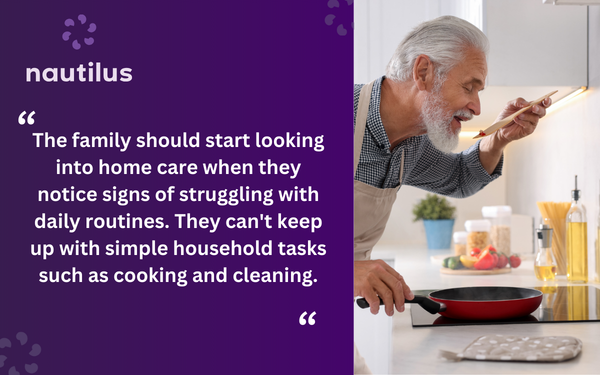
The family should start looking into home care when they notice signs of struggling with daily routines. They can’t keep up with simple household tasks such as cooking and cleaning.
Falling and struggling to maintain balance are early signals that their physical abilities are declining.
| Sign or Situation | What Families Notice | How Home Care Helps |
|---|---|---|
| Difficulty with daily routines | Skipping meals, full laundry bin, wearing same clothes | Help with bathing, dressing, meal preparation, and chores |
| Falls and balance issues | Unsteadiness, fear of standing or walking | Mobility support and fall prevention |
| Safety concerns | Forgetting medication, leaving stove on, unlocked doors | Supervision and reminders for daily safety |
| After a hospital stay | Weakness, fear of falling again, low confidence | Recovery support, medication help, emotional reassurance |
| Chronic health conditions | Difficulty managing symptoms or routines | Medication reminders, routine building, transport to appointments |
| Cognitive changes | Confusion, repeated questions, missed appointments | Supervision, reminders, and accompaniment |
| Isolation and loneliness | Staying home, limited social interaction | Companionship, walks, and social outings |
| Family caregiver burnout | Stress, missed self-care, juggling work and caregiving | Respite care and shared responsibilities |
| Fear of driving | Avoiding errands, missed appointments | Safe transportation for daily needs |
| Planning ahead | No crisis yet, but future concerns | Gradual, flexible care that adapts over time |
Difficulty With Daily Routines
As people age, their muscles weaken. This makes it difficult to deal with everyday tasks such as bathing, dressing, and chores.
At first, it is challenging to spot the signals. A full laundry bin, wearing the same clothes or skipping meals. If these signs persist, it is time to start looking into home care.
For example, a senior used to love cooking. But now they rely on snacks or ready-made foods and neglect nutrition.
For them, standing for long causes pain and fatigue.In this case, a caregiver can visit and help with meal preparation.
Safety Concerns
At a certain point, living alone is no longer safe for seniors. Forgetfulness is one of the first signs to monitor. This can start with forgetting to take medication.
Soon after, they can forget to turn off the appliances or wander away from the home. Such events are high-risk and should be taken seriously.
For example, an elderly lady forgets to lock the door. She also leaves the stove on. The family decides to get in-home care to monitor her and ensure safety. They supervise the lady while remaining respectful. This helps establish a safe home environment, providing peace of mind for the family.
After a Hospital Stay
Staying in a hospital is stressful. It takes some time for patients to regain their confidence and independence.
Home care provides non-medical help to aid recovery. Plus, it prevents hospital readmissions.
For example, a senior is back home from the hospital after a fall. They can walk but feel afraid of falling again. Plus, they feel weak due to the hospital stay.
The caregiver helps with mobility, bathing, and managing medication. They encourage light movement and exercise based on the doctor’s recommendations. This prevents them from falling again and returning to the hospital. Emotional support also helps them regain their confidence.
Chronic Health Conditions
Health conditions affect daily functioning. When your loved one struggles to keep up, turn to home care. A caregiver helps monitor symptoms, follow medication schedules, and take them to doctor’s appointments.
A person with diabetes benefits from home care. The caregiver ensures meals and medication are taken on time. They establish a routine and encourage the client to follow it.
Cognitive Changes
Cognitive changes, such as confusion and forgetfulness, question one’s safety. In this case, supervision and assistance are a must.
The caregiver helps with reminders and supervision.
An older lady forgets her medical appointments and medication. She also repeats questions frequently. The caregiver ensures the medication is taken and takes her to the doctor.
Isolation
Many seniors start feeling lonely and isolated. Home care provides companionship and emotional support.
A widowed senior feels lonely after losing his wife. He lives alone and spends most of his time at home. The caregiver provides social interaction, takes him on walks, and drives him to social events.
Family Caregiver Burnout
Family members take on caregiving responsibilities. However, this can impact their health and well-being. Juggling caregiving, work, and other responsibilities results in burnout.
This is when home care steps in to support the family. A daughter takes care of her aging father while working full-time.
Getting home care for a few hours a day helps her a lot. She has time to rest and never misses her own doctor’s appointment.
Resistance Toward Care Facilities
Moving to a care facility is very difficult for seniors. They feel like they lose their dignity and independence. Many might resist this change even though they’re no longer able to take care of themselves.
Home care helps keep independence while providing the care they need. For example, a senior resists going to a facility. They prefer their home environment and want to establish their own routine. The caregiver provides assistance at their own pace to preserve independence.
Fear of Driving
With time, driving becomes a problem for seniors. They have vision problems, slower reaction time, and dizziness. This makes driving unsafe, so they stop it. In many cases, seniors do this without telling their family.
A senior used to drive regularly. But now he avoids it. He doesn’t go grocery shopping. When asked, the senior says he is too tired. But in reality,he doesn’t want to admit they’re afraid of driving because they don’t feel safe anymore.
Transportation is part of the services offered by home care. The caregiver drives clients to the doctor, grocery store, or social events.
This allows seniors to socialize and continue with their routine while ensuring safety. And families won’t have to worry that their loved one will miss their appointments.
Planning Ahead
A family can start looking into home care even before they notice any signs. Planning allows them to choose the right provider.
For example, a family starts to look into home care even though the senior is still independent. They take time to review different providers and care plans. Otherwise, the decision may feel rushed if a crisis happens.
They start with weekly visits. The caregiver provides companionship and housekeeping. The care plan is flexible, and the services and hours can be easily adjusted.
Why Families Wait For Too Long
Many families postpone home care for seniors. However, this is done with good intentions. Families don’t want to take away their independence. Or they’re afraid of their reaction.
In addition, it is difficult for family members to accept that their loved ones need help. Aging brings challenges, and it might progress faster than expected.
Lastly, many families believe they can handle caregiving. While it might be manageable in the beginning, it will be more stressful as their needs change.
Family members live in a whole different world. They have a full-time job and children. At the same time, they need to take care of their own health.
Caregiving can be time-consuming and overwhelming. This results in stress and burnout. That’s why having backup is important.
The care plan can start with weekly visits. Seniors will connect with the caregivers, engaging in social interactions. Whenever there is a crisis, they will have familiar faces taking care of them.
Things to Discuss with Your Home Care Provider
The first step is a discussion with your home care provider. This way, you get familiar with their processes before deciding.
Feel free to share the type of care required. Some individuals are independent but need companionship. Others need help with personal care. This allows the provider to assign the right caregiver.
The care schedule is another important topic. Ask about the flexibility and adjustments. Needs often change, and your plan should accommodate that.
A few hours a week are enough for seniors who are independent but need assistance. Daily support is needed for those with health issues or during recovery.
For example, a family starts with meal preparation. But they soon realize their loved one needs help with bathing.
A client starts with three visits per week. As daily living gets more challenging, they switch to daily care without changing the provider.
Final Take
A family should start looking into home care as early as possible. When a crisis happens, it is already too late. You would want to check different options and compare providers before making a decision.
You don’t have to go through everything alone. Our experienced professionals will support your loved ones. Contact us now and explore your home care options.
| Question | Answer |
|---|---|
| When should we start looking into home care? | As soon as daily routines, safety, or health become challenging—even before a crisis. |
| Does home care mean losing independence? | No. Home care supports independence by assisting only where help is needed. |
| How many hours of care are usually needed? | It depends. Some seniors need a few hours weekly, while others need daily support. |
| Can care increase if needs change? | Yes. Home care plans are flexible and can be adjusted at any time. |
| Is home care only for medical needs? | No. It also includes companionship, transportation, housekeeping, and daily support. |
| Why do families wait too long to get help? | They fear loss of independence or believe they can manage alone until burnout occurs. |