


Seniors may forget to turn off the stove. Or they miss a step on the stairs. You may notice unopened mail, an empty fridge, or medications that haven’t been taken. At first, families may believe it is part of getting older. But as it happens more often, they realize their loved one needs help.
When seniors need assistance, in-home care is seen as a balanced solution. They can remain at home, enjoying their usual routines and habits. At the same time, families are sure their loved one is safe and cared for.
When looking for the best options, budgeting may be one of the worries. Families want to know what insurance covers in-home care. This guide explains more about how to make in-home care more accessible.
Learn more about how much home care costs in Boca Raton
| Key Point | Explanation |
|---|---|
| Insurance is limited | Most plans don’t cover long-term, non-medical care |
| Medicare is short-term | Only covers care tied to recovery or medical needs |
| Medicaid has strict eligibility | Income limits make qualification difficult for some families |
| Combination is necessary | Families often mix insurance, VA benefits, and personal funds |
| Planning reduces stress | Understanding coverage early helps avoid rushed decisions |
Understanding In-Home Care
Before looking at insurance, you should understand what in-home care includes. This includes non-medical care such as bathing, dressing, cooking, and companionship.
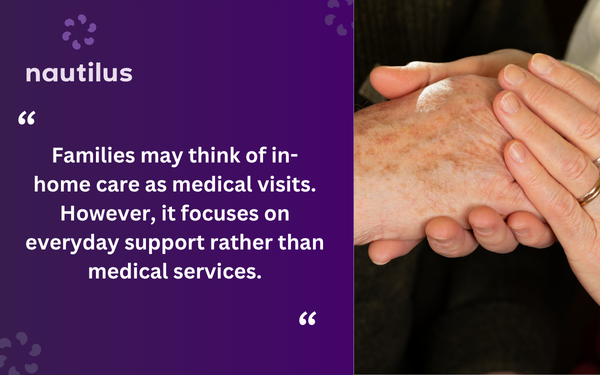
This is where misunderstandings can occur. Families may think of in-home care as medical visits. However, it focuses on everyday support rather than medical services.
Caregivers help with:
- Bathing
- Dressing
- Meal preparation
- Light housekeeping
- Medication reminders
- Companionship
- Mobility assistance
Home care allows seniors to stay comfortable and safe at home. For families, this is the type of help they need in everyday life. This may include having someone supervise their loved one while they’re at work. Or cook a meal and help the senior with moving around the home while they’re sorting out their personal responsibilities.
| Insurance Type | What It Covers | Limitations |
|---|---|---|
| Medicare | Short-term medical home care (nurses, therapists) | No long-term or standalone personal care coverage |
| Medicaid | Personal care, mobility, some family caregiver pay | Income-based eligibility; strict qualification rules |
| Long-Term Care Insurance | Non-medical care like bathing, dressing, some housekeeping | Benefit limits, elimination periods, policy restrictions |
| Veterans Benefits | Multiple programs supporting in-home care | Eligibility varies; often partial coverage |
| Out-of-Pocket | Covers remaining care needs | Can be costly; often necessary for full coverage |
What Insurance Covers In-home Care?
Insurance provides limited coverage for in-home services. It is designed primarily for medical needs and not long-term support.
Medicare
Medicare provides limited coverage for in-home care, but only if certain requirements are met. It is often the first place where families look.
Medicare provides short-term medical care at home. It may cover nurse or therapist visits after an illness or hospital stay.
Home health aide support is part of a broader program. This includes personal care services performed while the patient receives medical care. In fact, home health aide isn’t approved on its own and is a supporting service.
For example, a patient is recovering from surgery. A nurse visits regularly, and an aide helps with bathing and mobility. After the recovery period, both services stop.
Medicare doesn’t cover daily and long-term help. Instead, it focuses on recovery. Services like bathing, dressing, cooking, supervision, and companionship are not part of the insurance.
Medicaid
Medicaid covers home care services for individuals with low income and assets. Services like personal care and mobility are approved. In some cases, it provides payment for family caregivers.
However, Medicaid is often difficult to understand. It is income-based, meaning that only individuals with lower incomes qualify. However, there is a catch. Some families find themselves in a difficult position. Their income is too high to qualify but not enough to cover out-of-pocket costs.
Long-Term Care Insurance
Long-term care insurance provides direct help for non-medical services. These policies are designed for individuals who need long-term support. Most cover personal care assistance, but light housekeeping may also be included in some policies.
The coverage depends on the policy, how it’s triggered, and the level of care. However, long-term care insurance comes with daily or monthly benefit limits, a lifetime maximum, and an elimination period. Families should understand what this means and how it affects their situation.
Veterans Benefits
Veterans and their spouses may get additional support. The VA offers several programs that can ease the financial burden.
The VA programs include:
- Homemaker and home health aide care
- Aid and Attendance benefit
- Veteran-directed care
- Caregiver Support Program
Families should look into the different programs. Don’t assume that your loved one qualifies for only one of them. These programs are designed to work together, so you can apply them to more than one at the same time.
Learn more about specific insurances:
What Families Can Do Next
Families may feel frustrated knowing how limited the insurance coverage can be. But it is important to understand your eligibility and work with what you have.
However, the process comes with challenges. The policies are not always clear. Families can start by reviewing the insurance policies they have.
Review Insurance
Understanding your insurance is an important step. Contact your provider and ask specific questions to understand more about the coverage. Ask whether non-medical services are included, hours, visits, and qualifying conditions. The details matter in determining whether the plan will help you offset the cost.
Identify the Gaps Insurance Won’t Cover
Many families feel disappointed after finding out their coverage offers less than they thought. At this point, it is important to understand what’s not included and how to fill the gaps.
Combine Coverage
Don’t rely on only one type of insurance. Combine different coverage options to reduce the out-of-pocket cost. Medicare may cover the short-term needs. Long-term insurance provides ongoing care. Veteran benefits can also offset the cost if the person is eligible.
For the rest, families have two options. First, they can provide caregiving themselves in addition to in-home care. Or they can pay out of pocket and hire in-home care agencies.
Ask About Eligibility Early
Don’t wait until decisions are urgent. Programs like Medicaid and veterans’ benefits take time to arrange. Even if your loved one isn’t eligible at the moment, it’s still worth exploring and understanding your options. If the situation changes, you’ll be prepared.
Revisit Coverage as Needs Change
Needs don’t stay the same. Even if a person wasn’t eligible, this may change due to their health conditions. Always check if their condition has changed, and if they qualify for additional benefits.
Plan Financially
Families should plan financially for the things insurance won’t cover. Once you understand the coverage limits, you can estimate the remaining cost.
Family members can cover a few hours of care per week. They can start with part-time home care to minimize the cost. Many families start with fewer hours and increase them gradually as more support is needed.
Practical Ways to Make In-Home Care Work
Start Small
A few hours per week may be enough in the beginning to cover basic needs. The schedule can be adjusted as the needs increase. This also gives your loved one time to adjust to having the caregiver in their home.
Schedule Around Daily Routines
With fewer care hours, find ways to make the most of them. Schedule the hours when your loved one needs the most help. For some, it may be the mornings when seniors need help with bathing and preparing breakfast. For others, it may be the evening routine.
Combine Family and Professional Care
Family members can fill the gaps that insurance doesn’t cover. For example, a professional caregiver helps with daily routines. The family provides support in the evenings and on weekends.
Track Hours and Needs
Tracking the hours and needs is helpful for understanding patterns. This also gives you a strong foundation for further planning. But also documenting the needs is important for insurance.
Use Technology
Technology can make things easier. Medication reminders or pill dispensers remind your loved one to take their medication on time. Video check-ins help monitor safety. Lastly, apps can help you communicate with the caregiver.
Communicate Openly with Your Loved One
Families should include their loved ones in the planning process. Explain why support is coming and with which specific tasks. Understand their preferences for routines and privacy. These simple things help preserve dignity and improve cooperation.
Prepare for Flexibility
Needs can change quickly. Illness, fatigue, or unexpected events require adjusting the care hours. Family members should be ready to shift schedules to ensure their loved one remains safe.
Flexibility is a strong advantage in in-home care. The care plans often change. More hours and new services can be added to support the individual.
Start Exploring In-Home Care Agencies
Don’t wait until a crisis occurs to explore home care. Knowing the local providers, their rates, and conditions is helpful for making decisions.
Home care agencies have trained caregivers they can assign. They have the necessary experience and certification to support seniors safely and respectfully. Ask for recommendations, check credentials, and understand services and costs to avoid rushed decisions.
Final Thoughts
While insurance may not cover all aspects of home care, it can certainly help. Families should explore their options ahead of time and understand what they can work with. This helps make the right decision in a crisis.
Home care services make a big difference. Working with a trusted agency helps you create a plan tailored to your family’s needs. Contact us now.
| Question | Answer |
|---|---|
| Does Medicare cover in-home care? | Only short-term medical care tied to recovery, not daily support |
| Can Medicaid pay for home care? | Yes, but only for those who meet income and asset requirements |
| What insurance covers long-term care? | Long-term care insurance is designed for ongoing non-medical support |
| Are non-medical services covered? | Usually not, unless through Medicaid or long-term care insurance |
| What if insurance isn’t enough? | Families often combine coverage and pay out-of-pocket for remaining care |