


When a parent starts forgetting things, you may brush it off. At first, the family usually finds an explanation. He’s tired. She’s stressed. Everyone forgets things sometimes. Then it happens again. And again.
Perhaps your mother calls to ask what time you’re coming over, then calls again ten minutes later. Maybe your father, who has paid the household bills for forty years, suddenly has an overdue notice on the kitchen table. When the problems are serious, the person should be assessed by a doctor.4
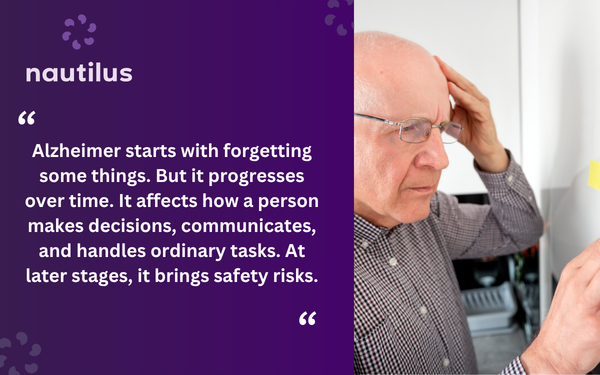
Alzheimer starts with forgetting some things. But it progresses over time. It affects how a person makes decisions, communicates, and handles ordinary tasks. At later stages, it brings safety risks.2
What Is Alzheimer’s Disease?
Alzheimer’s disease is a condition that damages brain cells and affects memory, thinking, language, and everyday functioning. Over time, tasks that once took little thought require help from another person.2
Alzheimer’s is the most common cause of dementia. Dementia itself isn’t a disease. It describes problems with memory and thinking. And Alzheimer’s is one of the conditions that causes dementia. The changes usually develop gradually.3
Forgetfulness can be a normal part of aging. But Alzheimer’s isn’t. Forgetting where you left your glasses or why you entered a room happens even to healthy people. But getting lost on a familiar street or forgetting important conversations deserves attention.3
Some memory problems are the result of medication effects, sleep problems, and certain medical conditions. Getting checked by a doctor is crucial for finding the cause.4
Doctors often describe Alzheimer’s using seven stages. This explains the general progression of the disease, but not all people have the same symptoms.1
The 7 Stages of Alzheimer’s Disease
No Noticeable Cognitive Decline
Everyday life looks the same. The person can do household chores, manage appointments, and remember familiar faces. This is what makes the first stage difficult to identify. Changes associated with the disease aren’t apparent in daily life.1
Forgetting a name doesn’t have to be a warning sign. What matters is a persistent change from the person’s usual abilities. This should be discussed with a doctor, especially when there is a family history of Alzheimer’s.
Very Mild Cognitive Decline
The first signs are easy to dismiss. The senior forgets where they put their glasses more often. Or they don’t remember a person’s name. Family members don’t notice anything unusual.
The person usually continues managing daily life independently. A retired man in Fort Myers has always been particular about his belongings. His keys go in the same bowl beside the front door, and his glasses stay on the kitchen counter. Lately, he spends more time looking for both.
Still, things like stress, poor sleep, medication, and other health conditions affect memory. A medical assessment helps determine the cause.4
Mild Cognitive Decline
This is when the family starts noticing changes. The person repeats questions, forgets recent plans, or struggles to organize tasks that were once straightforward. It often shows up in the things nobody else had to think about before.2
A retired bookkeeper in Jacksonville has always handled her family’s bills. One month, her daughter discovers an overdue payment. Then another bill goes unpaid. Her mother says she already took care of them.
The daughter begins helping with paperwork and notices other changes. Her mother tells the same story several times and loses track of conversations. This is the right time to schedule a medical appointment.5
Moderate Cognitive Decline
At the fourth stage, memory problems make independent living harder. The person can still recognize relatives and enjoy familiar activities.
A woman in Fort Lauderdale has cooked Sunday dinner for her family for years. She used to cook her favorite recipes frequently without checking her cookbook. Now, she forgets which ingredients she added and loses track of what is cooking on the stove.
Her son started helping with meal preparation. They still have Sunday dinner together. But it requires planning and support. That distinction matters.
With the proper support, people with Alzheimer’s can enjoy their favorite activities and remain involved. At this stage, families should look at medication routines, driving, finances, and home safety.9
Severe Cognitive Decline
The person struggles to remember important details. They may forget their address or telephone number, lose track of the date, or have trouble choosing suitable clothes. What’s even more concerning is that they lose track of where they are. Some people are restless in the evening.1
A woman in Orlando begins telling her husband that she needs to go home. The difficult part is that she is already sitting in her own living room. He tries to explain that they have lived there for years. She becomes more upset, and neither of them gets anywhere.
During this stage, families should assess whether their loved one takes their medication, eats regularly, and stays safe at home. Wandering and falls are a common concern at this stage. Regular supervision and help with daily tasks are needed.7
Very Severe Cognitive Decline
This is the final stage, where people need help every day. They have difficulties with walking, speech, and swallowing. For family members, this is painful. Their loved one no longer recognizes them or responds to conversations.6
An older man in Tampa spent his retirement fishing with his grandchildren. The man rarely speaks. The family loved the stories he used to tell and misses them. His daughter plays the music he enjoyed and shows him old photographs. She doesn’t expect him to remember the visit. This is a way to spend time together. For Alzheimer patients, familiar voices and a calm environment help.
Care focuses on comfort, personal hygiene, skin protection, nutrition, and preventing complications.6
How Home Care Helps With Alzheimer’s Disease
Caregiving starts as small favors you do for your loved one. You will pick up groceries on your way home. Or you call to remind your parents about their appointment. As the condition progresses, they need more involved support. Someone needs to check whether they turned the stove off. And nighttime wandering is a big concern.7
Still, family members may not have enough time to be present. They have their full-time jobs and family responsibilities. But moving the person to a facility may still not be an option. They may resist changes. Also, remaining in a familiar environment is beneficial for Alzheimer patients.
For example, a daughter works full time while her mother lives at home. She worries that her mother forgets to eat or leaves the house. The daughter arranges home care services to cover for the hours when she’s at work. Her mother is safe and has company. Now, she doesn’t have to check her phone constantly.
Families need a break too. Looking after someone with Alzheimer’s means interrupted sleep, a sense of responsibility, and constant questions. Plus, they have family responsibilities and their own health to attend to. When a caregiver is here,e families can step away without any guilt.
Simply put, home care isn’t medical treatment. It helps with everyday living and managing practical tasks. The goal is to let your loved one enjoy the familiar surroundings while still being safe.
Families in Florida can get help from home care agencies. A home caregiver comes to the person’s home and helps with everyday tasks. Mind you, support can look different for everyone.
During the earlier stages, the caregiver provides companionship, reminders, and help with appointments and routines. This is usually a few hours per week. Support often includes preparing meals, light housekeeping, and supervision.
As the condition progresses, the care plan includes assistance with bathing, dressing, grooming, toileting, and safe movement. Some caregivers are trained to provide assistance for Alzheimer’s patients. This may include safety monitoring, redirecting behaviors, and participating in beneficial activities.10
A woman with Alzheimer’s keeps insisting she needs to leave the house to pick up her children. The children are already adults. The caregiver doesn’t argue. Instead, she changes the subject. She asks for help to fold towels. The woman starts doing the task and forgets that she was about to leave. The caregiver stays calm and redirects her to a familiar activity.8
Establishing a predictable routine is helpful. The caregiver prepares breakfast at the usual time. Then, they let the seniors enjoy their favorite TV show before afternoon rest.9
But this includes non-medical services only. Medical needs require healthcare professionals.
Getting Support for Your Family
Alzheimer’s affects both the person and their family. The roles change. The daily routines become harder to manage, so they need help. Arranging assistance during the first stages makes it easier. Your loved one will get used to a familiar face, and their daily routines will be less confusing.
Home care doesn’t have to be complex. If you have any questions, we’re here to answer them for you. Contact us today and schedule a consultation.
References
- Alzheimer’s Association — Seven Stages of Alzheimer’s Disease
- National Institute on Aging — What Are the Signs of Alzheimer’s Disease?
- CDC — Alzheimer’s Disease: Signs and Symptoms
- National Institute on Aging — Assessing Cognitive Impairment in Older Patients
- National Institute on Aging — Cognitive Assessment: Considerations for Understanding the Evidence
- Alzheimer’s Association — Late-Stage Caregiving
- National Institute on Aging — Wandering and Alzheimer’s Disease
- Alzheimer’s Association — Wandering
- Alzheimer’s Association — Daily Care Plan
- National Institute on Aging — Caring for a Person With Alzheimer’s Disease