

Helen had always been careful. She held onto the handrail when using the stairs, wore comfortable shoes, and never rushed around the house.
Still, one afternoon, she reached up to grab a serving bowl from the top kitchen shelf and lost her balance. She didn’t fall hard, but it was enough to fracture a bone in her wrist.
Her doctor explained that osteoporosis had weakened her bones over the years. Suddenly, ordinary activities carried more risk than they once had.
Helen didn’t want to move out of her home. She loved her morning routine, her garden, and chatting with neighbors from her front porch. She needed extra help with the daily tasks that had become difficult.
Instead of moving to a facility, her family arranged home care. The agency explained that home care provides practical support with a strong focus on preventing injuries.. This is how seniors with osteoporosis continue living comfortably at home while staying active, independent, and connected to the life they’ve built.
Key Takeaways
- Osteoporosis weakens bones, making even minor falls or everyday movements more likely to cause fractures.
- Many seniors don’t realize they have osteoporosis until they experience a broken bone or receive a bone density test.
- Creating a safer home environment and reducing fall hazards are essential for maintaining independence.
- Home caregivers assist with physically demanding chores like laundry, housekeeping, grocery shopping, and lifting heavy objects.
- Safe daily movement helps maintain muscle strength, balance, and mobility while reducing the risk of future falls.
- Nutritious meals that include calcium, protein, and other important nutrients support overall bone health.
- Transportation assistance helps seniors continue attending medical appointments, therapy sessions, and social activities.
- Companionship encourages seniors to stay socially connected and reduces feelings of loneliness or isolation.
- Following a fracture, home care provides temporary support with bathing, dressing, meal preparation, and mobility during recovery.
- Home care plans are flexible and can be adjusted as a senior’s needs change over time.
What Is Osteoporosis?
Osteoporosis is a condition that causes bones to become weaker and more fragile over time1. The bone density decreases, so a minor fall or awkward movement can result in a fracture. The hips, spine, and wrists are the most commonly affected areas.3
Many seniors don’t realize they have osteoporosis until they break a bone. Others are diagnosed after a routine bone density test.
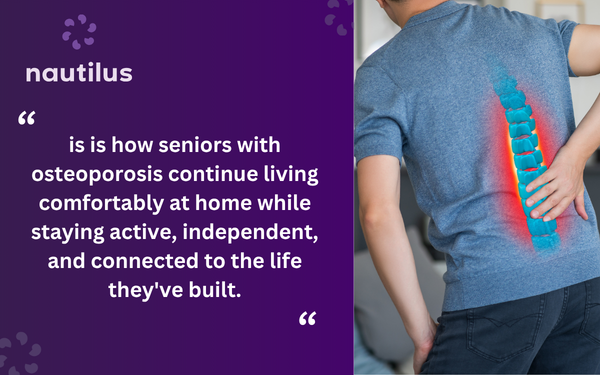
The condition doesn’t cause pain on its own. But it increases the chances of serious injuries.
Because of that, daily habits become just as important as medical treatment. Staying active, preventing falls, eating nutritious meals, and having support with physically demanding tasks all help seniors continue living safely at home.2
| Topic | Key Information | How Home Care Helps |
|---|---|---|
| What Is Osteoporosis? | Bones become weaker and more fragile, increasing the risk of fractures, especially in the hips, spine, and wrists. | Supports safe daily routines, encourages healthy habits, and helps reduce injury risks. |
| Daily Challenges | Simple activities like carrying laundry, reaching high shelves, or lifting groceries become more difficult. | Caregivers assist with physically demanding tasks to reduce strain and fall risks. |
| Fear of Falling | Many seniors become less active due to fear of injury, leading to reduced confidence and mobility. | Provides supervision, encouragement, and reassurance during everyday activities. |
| Recovery After Fractures | Healing often takes longer and daily activities become more challenging. | Assists with bathing, dressing, meals, mobility, and gradually promotes independence. |
| Home Safety | Reducing household hazards lowers the chance of falls. | Removes tripping hazards, reorganizes frequently used items, and promotes safer home layouts. |
| Household Assistance | Heavy chores increase physical strain and injury risk. | Handles laundry, vacuuming, changing linens, trash removal, and grocery lifting. |
| Safe Physical Activity | Regular movement supports muscle strength and balance. | Encourages safe walks, stretching, gardening, and other approved activities. |
| Meal Preparation | Proper nutrition supports overall bone health. | Prepares balanced meals while allowing seniors to safely participate in cooking. |
| Transportation & Errands | Driving and shopping may become difficult and increase isolation. | Provides rides to appointments, stores, pharmacies, and assists with shopping. |
| Companionship | Fear of falling may lead to loneliness and social isolation. | Offers conversation, shared meals, walks, games, and emotional support. |
| Family Peace of Mind | Loved ones often worry about seniors living alone. | Caregivers provide regular support, reducing stress while families enjoy quality time together. |
| Flexible Care | Support needs vary from occasional assistance to daily care. | Home care plans adapt as needs change, helping seniors maintain independence. |
Everyday Life Changes After an Osteoporosis Diagnosis
Simple Tasks Require More Thought
The chore that took ten minutes now takes more planning. Carrying a heavy basket of laundry, climbing a step stool, reaching into a high cabinet, or carrying groceries inside requires caution.
The simple tasks become a burden, knowing that a single fall can result in months of recovery.
Fear of Falling Changes Daily Habits
The fear of falling changes the way a person feels about moving around. A senior who once walked around the neighborhood every evening starts staying inside. Someone who loves gardening stops working in the yard because uneven ground feels too risky.
Over time, seniors lose their confidence and give up their favorite activities.
Recovery Takes Longer
Broken bones heal more slowly in older adults. A hip fracture or spinal fracture can affect mobility for months, making everyday activities much harder than they were before the injury. Basically, preventing falls becomes the focus.
Family Members Worry Constantly
Adult children worry whether their parents carried the laundry basket upstairs or climbed a chair to change a lightbulb. When seniors live alone, these concerns become part of everyday life.
How Home Care Helps Seniors with Osteoporosis
Reducing Fall Risks Around the House
A safe home is one that makes moving around easy. A caregiver helps keep floors clear, removes tripping hazards, and organizes everyday items so they stay within reach.7
Also, they encourage safe habits throughout the day. For example, instead of climbing onto a chair to reach dishes stored on a high shelf, the caregiver rearranges the kitchen so that frequently used plates and cups are easy to reach.
Thoughtful adjustments like this one help prevent accidents.
Helping with Heavy Household Chores
Vacuuming, carrying laundry baskets, changing bed linens, taking out trash, or lifting heavy grocery bags all place extra strain on the body. A caregiver takes over the physically demanding tasks so the senior is safe.
Instead of worrying about carrying a basket down basement stairs, the seniors focus on activities they enjoy.
Encouraging Safe Movement
Many seniors start to move less because they’re afraid of falls. Still, spending too much time sitting weakens muscles and affects balance.
Safe movement should be part of the everyday routine so seniors can stay healthy. A caregiver encourages safe daily activities based on the senior’s abilities and the healthcare provider’s recommendations.5
That could mean taking a short walk around the block, stretching in the morning, or walking through the backyard to water flowers.
Making Everyday Activities Easier
One of the hardest parts of having osteoporosis is feeling nervous about ordinary routines. A caregiver stays nearby while a senior gets into the shower or walks outside to collect the mail. Their presence provides reassurance.
For example, a senior who enjoys sitting on the front porch no longer has to worry about carrying a folding chair across the yard. The caregiver sets everything up first, allowing the senior to simply enjoy the afternoon.
Preparing Healthy Meals
Seniors with osteoporosis need proper nutrition. But they may be hesitant to cook a meal. A caregiver prepares balanced meals that include foods rich in calcium, protein, and other nutrients that support overall health.4
The senior can enjoy a nutritious meal without having to stand for an hour while cooking or lifting heavy pots.
Still, many seniors prefer to participate. The caregiver allows them to do safer tasks such as peeling vegetables, choosing ingredients, or setting up the table. Cooking becomes a shared activity instead of a struggle.
Helping After a Fracture
Short-term home care helps during recovery6. Some seniors begin home care after breaking a hip, wrist, or spine. At this point, they need help with bathing, dressing, meal preparation, mobility, and household tasks. The caregiver assists with these tasks while the senior regains their strength.
For example, a senior returned home from the hospital and is recovering from a hip fracture. He needs help getting into bed, preparing breakfast, and walking safely to the bathroom.
As recovery progresses, the services can be adjusted. Ultimately, the senior will be encouraged to do more independently.8
Providing Transportation
Many seniors stop driving because they no longer feel comfortable getting in and out of a vehicle alone. Over time, this leads to loneliness and isolation.
Home care helps them stay connected to their community. A caregiver provides transportation to doctor’s appointments, physical therapy, grocery stores, pharmacies, family gatherings, or community events.
Instead of canceling appointments or relying on adult children every time they need to go somewhere, seniors continue following their normal routines.
Helping with Shopping and Errands
A simple grocery trip is physically demanding. Walking through large stores, lifting shopping bags, and unloading groceries becomes exhausting..
A caregiver can handle these responsibilities. Sometimes the senior wants to participate. Going to the grocery store is a favorite outing for many. For example, the senior chooses fresh produce while the caregiver pushes the cart and carries the groceries.
Basically, the senior stays involved without taking risks.
Providing Companionship
Many seniors feel hesitant to leave the house after an osteoporosis diagnosis because they’re afraid of falling. When they start feeling lonely, companionship is one of the home care services that can help. A caregiver sits over lunch, takes walks, plays cards, or spends time talking. These conversations become something many seniors look forward to.
Giving Family Members Peace of Mind
Family members want to protect the people they love. Still, they aren’t able to be constantly present. They have their full-time jobs and family responsibilities.
Knowing that a caregiver is checking in, helping with daily routines, and reducing fall risks eases the stress. Instead of worrying whether their parents are safe, they know someone is there to assist with the riskier tasks.
But that doesn’t mean families have to step away. They can still enjoy meaningful moments together, without spending time on chores.
Support That Fits the Senior’s Needs
Not every senior with osteoporosis needs daily care. Many want help with housekeeping and transportation. But others need hands-on support while recovering from a fracture.
The good news is that home care adapts as needs change. That flexibility allows seniors to receive help exactly when they need it without giving up their independence.
Final Thoughts
An osteoporosis diagnosis feels overwhelming for seniors. But it doesn’t have to mean this will take away their independence. They can still stay in the comfort of their own home and continue doing the things they have enjoyed for years.
With thoughtful support, everyday activities become safer. A caregiver handles the jobs that carry the greatest risk. Plus, they encourage healthy routines and help seniors continue enjoying the life they have built for years.
That means spending an afternoon with family instead of catching up on physically demanding chores. It means taking a walk to the mailbox or around the block with confidence, knowing someone is there if support is needed.
If you’re considering home care, now is the right time to get started. Contact us today and schedule a free consultation.
| Question | Answer |
|---|---|
| What is osteoporosis? | Osteoporosis is a condition that gradually weakens bones, making them more likely to break from minor falls or everyday movements. |
| Can seniors with osteoporosis continue living at home? | Yes. With proper safety measures, home modifications, and caregiver support, many seniors safely remain in their own homes. |
| How does home care reduce fall risks? | Caregivers remove tripping hazards, organize frequently used items, assist with mobility, and encourage safe daily habits. |
| What household tasks can a caregiver help with? | Caregivers commonly assist with housekeeping, laundry, meal preparation, grocery shopping, changing linens, and other physically demanding chores. |
| Can home care help after an osteoporosis-related fracture? | Yes. Home caregivers provide temporary assistance with bathing, dressing, mobility, meals, and everyday tasks while seniors recover. |
| Does home care include transportation? | Many home care providers offer transportation to medical appointments, physical therapy, grocery stores, pharmacies, and community activities. |
| Why is companionship important for seniors with osteoporosis? | Companionship helps reduce loneliness, encourages social interaction, and gives seniors greater confidence to stay active. |
| Is home care available on a flexible schedule? | Yes. Care plans can range from a few hours each week to daily or full-time support, depending on the senior’s needs. |
References
- National Institute of Arthritis and Musculoskeletal and Skin Diseases (NIAMS). Osteoporosis.
- NCBI Bookshelf (InformedHealth.org). Osteoporosis: Prevention.
- Bone Health & Osteoporosis Foundation. What Is Osteoporosis?
- International Osteoporosis Foundation. Nutrition.
- Royal Osteoporosis Society. Exercise for Healthy Bones.
- American Academy of Orthopaedic Surgeons. Hip Fractures.
- Centers for Disease Control and Prevention. STEADI: Stopping Elderly Accidents, Deaths & Injuries.
- American Physical Therapy Association. ChoosePT.