
• Skip to primary navigation
  • Skip to main content

Nautilus In Home Care Boca Raton Nautilus In Home Care Boca Raton logo

  • About
    • Blog
    • Areas We Serve
  • Services
  • FAQs
  • Contact
CALL NOW 561-637-4242 Available 24/7
  • About
    • Blog
    • Areas We Serve
  • Services
  • FAQs
  • Contact
  • CALL US (561) 637-4242

Dialysis

Home Care for Seniors Receiving Dialysis

For seniors with kidney disease, dialysis is part of their weekly routine. But treatment needs time, energy, and careful planning. Then there is everything that happens before and after the dialysis appointment: meals, medications, fluids, transportation, laundry, cleaning, and getting enough rest.

​Keeping up with all of this can feel overwhelming for seniors and their families. That is where home care makes a difference. We have worked with families who felt like every dialysis day had become a race against the clock.​

The senior needed to get ready, eat the right food, take medications at the right time, get to the dialysis center, come home safely, and then rest. Still, someone needed to prepare dinner and keep the house in order.

​Home care is there for families who struggle to manage everyday responsibilities. Our caregivers help seniors follow their daily routines, stay safe at home, and feel supported between dialysis treatments.​

Knowing someone is there to help with the everyday tasks and transportation gives family members peace of mind.

Key Takeaways
Home care provides practical support before and after dialysis appointments, helping seniors manage their everyday routines at home.
Caregivers can help seniors track fluid intake according to the specific limits established by their nephrologist.
Meal preparation and grocery shopping can follow the dietary guidelines provided by the senior’s nephrologist or renal dietitian.
Caregivers can provide medication reminders and follow an established medication routine, but they do not independently change medications or medical instructions.
After dialysis, caregivers can handle household tasks so seniors have time to rest and recover from fatigue.
Home safety support can help reduce everyday hazards when a senior feels weak or dizzy after treatment.
Transportation assistance can make getting to and from regular dialysis appointments easier and safer.
Home care also gives family caregivers relief from transportation, meal preparation, housekeeping, and other recurring responsibilities.

​

Managing Fluid Limits

Dialysis does more than take a few hours out of the day. Seniors often feel tired after their appointment. Yet, they need to pay attention to food, fluids, medications, and activity.

​Home care helps with the daily routines. The caregiver follows the care plan provided by the senior’s medical team. One important thing is fluid intake. The nephrologist sets a specific daily fluid target, and staying within that target is an important part of managing dialysis.

​It is easy to lose track of how much a person drinks throughout the day. A glass of water here, a cup of coffee there, soup with lunch, and other foods or drinks all add up.1

​The caregiver helps seniors keep track of their fluid intake according to the exact limits given by their nephrologist.2

​For example, an older gentleman in Boca Raton enjoyed having several cups of coffee throughout the morning. His family was concerned because he often forgot how much he had already consumed. Our caregiver helped him keep a simple daily record and reminded him about his fluid allowance throughout the day.

​The goal was to help him follow the plan his medical team had created. We also remind seniors to follow their doctor’s instructions about foods that contain significant amounts of liquid, such as soups.

​Also, we report concerning changes to their family or medical team.

Area of Support How Home Care Helps Benefit for Seniors & Families
Managing Fluid Limits Helps seniors track daily fluid intake according to the exact limits established by their nephrologist and provides reminders throughout the day. Makes it easier to follow the medical team’s fluid plan and helps families stay informed about concerning changes.
Kidney-Friendly Meals Prepares meals and assists with grocery shopping based on dietary instructions from the senior’s nephrologist or renal dietitian, including prescribed limits on sodium, potassium, phosphorus, or specific foods. Reduces the effort required for shopping and cooking while allowing seniors to remain involved in meal choices and preparation when possible.
Medication Schedules Provides medication reminders and follows the established medication routine and instructions supplied by the senior’s healthcare team or family. Caregivers do not independently change medications. Helps seniors stay organized with complex medication schedules and reduces the need for family members to repeatedly check on medication routines.
Post-Dialysis Fatigue Helps seniors settle in comfortably after treatment, handles routine chores, and supports appropriate meals, fluids, and rest according to the care plan. Creates a calmer transition home and allows seniors to rest rather than immediately worrying about household responsibilities.
Home Safety Helps reduce common household hazards by clearing walkways, keeping frequently used items within reach, and identifying potential risks such as loose rugs or clutter. Provides additional support when fatigue, weakness, dizziness, or low blood pressure after dialysis may increase fall risk.
Transportation to Dialysis Helps arrange reliable transportation and assists seniors with getting ready, packing what they need, leaving home, and transitioning safely back home after treatment. Reduces transportation stress and can prevent family members from having to rearrange every workday around dialysis appointments.
Housework & Daily Chores Assists with light housekeeping, laundry, changing bed linens, dishes, grocery shopping, meal preparation, and other routine chores included in the care plan. Allows seniors to conserve their energy for rest, hobbies, family time, and other activities that matter to them.
Family Caregiver Support Takes on everyday support responsibilities that family members may otherwise have to manage around work, children, and their own households. Gives family caregivers more time for their own responsibilities and allows visits with their loved one to focus more on quality time.

​

Preparing Kidney-Friendly Meals

Food is very important when a senior is receiving dialysis. Meals need to follow the dietary instructions provided by the nephrologist or renal dietitian.

​This depends on the person’s individual care plan. Often, it includes limiting sodium, potassium, and phosphorus.3

​For some seniors, that means avoiding or limiting foods such as tomatoes, bananas, processed meats, and other foods their healthcare provider has identified as inappropriate for their diet.

​The caregivers prepare meals based on the senior’s prescribed dietary guidelines. They also help with grocery shopping and meal preparation.

​One client we worked with had always enjoyed cooking for herself. After starting dialysis, she became frustrated because shopping and preparing meals took much more energy. Her daughter was working during the day and struggled to keep up with everything.

​The caregiver made mealtimes easier. They prepared simple meals that followed her dietary instructions, cleaned up afterward, and kept commonly used foods organized. The lady still participated in simple things like deciding what to eat and stirring the food.

​That small change made her feel more independent, not less.

​

Keeping Medication Schedules Organized

For a person who is receiving dialysis, there is a strict medication routine they need to follow. This becomes complicated for seniors. Some people take phosphate binders with meals. Others take blood pressure medications, vitamins, or other prescribed medications at specific times. Dialysis itself also affects the timing of certain medications.

​The most important thing is that every senior has a different medical plan. We follow the medication instructions provided by the healthcare team. Keep in mind that the caregiver doesn’t make changes because they aren’t medical personnel.

​But they help with providing reminders, keeping medications arranged according to the established routine, and making sure the senior knows when it is time to take them.

​A senior had his family create a medication chart. But they still worried about missed doses. Our caregiver followed the family’s established system and provided reminders throughout the day.

​The family no longer had to call several times just to ask whether their loved one took the medicine.

​

Watching for Fatigue After Dialysis

Dialysis days are exhausting. A senior returns home feeling weak, tired, dizzy, or simply drained. Some people need to spend much of the afternoon resting after treatment.

​We understand that dialysis day is not the day to expect a senior to come home and start cleaning the kitchen or doing laundry. Our caregivers help create a calm transition from the dialysis center to home.

​They make sure the senior gets settled comfortably, has the appropriate food and fluids according to their care plan, and has time to rest.

​One of our clients used to come home from dialysis and immediately try to put away groceries or straighten the house. Her family repeatedly told her to sit down, but she felt uncomfortable leaving chores unfinished.

​Our caregiver changed that routine.

​After dialysis, we handled the chores while she rested. Over time, she stopped feeling guilty about taking the afternoon off.

​

Making the Home Safer

After dialysis, low blood pressure and dizziness can lead to falls. So, safety is very important.

​The caregiver helps reduce common hazards around the house. That includes clearing clutter from walkways, keeping frequently used items within easy reach, and making sure the senior has stable handrails where needed.5

​For example, a senior who normally walks confidently through the living room may need extra support after treatment. A rug that never seemed like a problem before becomes a tripping hazard when someone feels weak.

​We help families identify these everyday risks.

​

Providing Transportation to Dialysis

Getting to and from dialysis three times a week is a major part of the routine for many seniors. But driving isn’t safe when a senior feels tired or dizzy after treatment. Public transportation also does not provide the level of assistance every senior needs.

​Home care services help families arrange reliable transportation. This also includes assistance with getting ready, leaving the home, and returning safely.

​For a senior in Boca Raton, dialysis appointments become the center of the weekly schedule. The caregiver helps the client get ready on treatment days, makes sure everything needed for the appointment is packed, and helps with the transition back home.

​The family does not have to rearrange every workday around a dialysis appointment.

​

Helping With Housework

After dialysis, ordinary household chores seem impossible due to fatigue. Laundry needs to be done. Dishes pile up. The bathroom needs cleaning. Groceries need to be put away. Trash needs to be taken outside.

​Together, they become a lot for someone who is already tired. The caregiver helps with those everyday household tasks so seniors have more energy for themselves.

​They assist with light housekeeping, laundry, changing bed linens, grocery shopping, meal preparation, and other routine chores included in the care plan.

​One client told us that the best part of having help was not seeing a spotless house. It was knowing she could spend her afternoon reading or talking with her grandchildren instead of worrying about laundry.

​That is what home care is really about.

​

Home Care Also Supports Family Caregivers

Dialysis affects the whole family. Adult children want to help their parents.  But they also have jobs, children, homes, and responsibilities of their own.6 Trying to handle every dialysis appointment and household task alone eventually becomes exhausting.4

​We see this often. A daughter who lives nearby may drive her father to dialysis three times a week. At first, she managed it without a problem. Then she starts missing work meetings. She spends her evenings grocery shopping and preparing meals. On weekends, she cleans the house.

​She is providing care almost every day. But she has no energy and time for her own things. That is the downside of being a family caregiver.

​Our caregiver handles the daily support while the daughter focuses on spending quality time with her father. She can visit without feeling like every visit has to involve laundry, cooking, or organizing medications.

​

Final Thoughts

Dialysis is a demanding part of life. Still, seniors and their families do not have to manage every part of the routine alone. Home care gives seniors practical support where they need it most. It makes those everyday days easier for seniors and their families in Boca Raton and the surrounding communities.

​If your loved one needs extra help between treatments, contact us today to learn more about our home care services.

Frequently Asked Question Answer
How can home care help a senior receiving dialysis? Home care can provide practical assistance with transportation, meals, fluid tracking, medication reminders, light housekeeping, laundry, grocery shopping, home safety, and rest after dialysis.
Can a caregiver help monitor fluid intake? Yes. A caregiver can help a senior keep track of fluid consumption and provide reminders based on the exact daily limits established by the senior’s nephrologist.
Can caregivers prepare meals for seniors on dialysis? Yes. Caregivers can prepare meals and assist with grocery shopping according to dietary instructions supplied by the senior’s nephrologist or renal dietitian.
Can a home caregiver manage dialysis medications? Caregivers can provide reminders and help seniors follow an established medication schedule. They do not independently prescribe medications, change doses, or alter instructions from the healthcare team.
Why might a senior need additional help after dialysis? Some seniors may return home feeling tired, weak, dizzy, or drained. A caregiver can help them settle in, rest, and avoid having to immediately handle household chores.
Can home care help with transportation to dialysis? Home care services can help families arrange reliable transportation and provide assistance with getting ready, leaving home, and returning safely after treatment.
What household tasks can a caregiver help with? Depending on the care plan, assistance may include light housekeeping, laundry, changing bed linens, dishes, grocery shopping, meal preparation, and other routine household chores.
How does home care help family caregivers? Home care can take on recurring daily responsibilities so family members have more time for work, their own households, and quality time with their loved one.

References

  1. Eating & Nutrition for Hemodialysis — National Institute of Diabetes and Digestive and Kidney Diseases
  2. Managing Your Fluid Levels — Kidney Care UK
  3. Hemodialysis and Your Diet — National Kidney Foundation
  4. Hemodialysis: Types, Results & How It Works — Cleveland Clinic
  5. Preventing Falls in the Home — Administration for Community Living
  6. Informal Caregivers’ Experiences of Caring for People Receiving Dialysis — Journal of Renal Care

Transportation to dialysis in Boca Raton

Dialysis is scheduled several times a week1. So finding a ride creates stress for the patient and the entire family. Getting from the front door to the car, getting settled inside, arriving on time, and making it home are part of the process.

​We have seen how much easier life becomes when transportation is handled as part of the care plan instead of being something the family has to figure out three times a week.

​Fortunately, families in Boca Raton have several transportation options. Home caregivers provide one of the most personal solutions, while non-emergency medical transportation companies, Palm Tran Connection, insurance transportation benefits, and services such as Uber Health offer additional choices.

Key Takeaway What Families Should Know
Dialysis Transportation Is a Recurring Need Because dialysis is often scheduled several times a week, choosing reliable transportation that works with a recurring schedule can reduce stress for seniors and their families.
Caregivers Provide More Than a Ride Home caregivers can help seniors get ready, walk to the vehicle, manage belongings, attend appointments, return home safely, and get settled after dialysis.
Post-Dialysis Support Matters Patients may feel tired after dialysis, making assistance from the clinic to the vehicle and from the vehicle into the home especially valuable.
Boca Raton Families Have Several Options Options discussed include home caregivers, non-emergency medical transportation, Palm Tran Connection, insurance transportation benefits, Uber Health, and transportation offered by some dialysis centers.
Mobility Needs Should Guide the Decision A senior who walks independently may only need transportation, while someone using a walker or wheelchair may require additional mobility assistance or an accessible vehicle.
Insurance May Help Cover Transportation Eligible Medicaid recipients and some Medicare Advantage members may have transportation benefits, but coverage and scheduling requirements vary.
Ask the Dialysis Center First Some dialysis centers provide patient transportation, so families should ask about availability, costs, scheduling requirements, service areas, and mobility accommodations.
Reliability Is Essential The right service should be able to accommodate recurring appointments and provide a clear, dependable scheduling process.

​

Transportation Provided by Home Caregivers

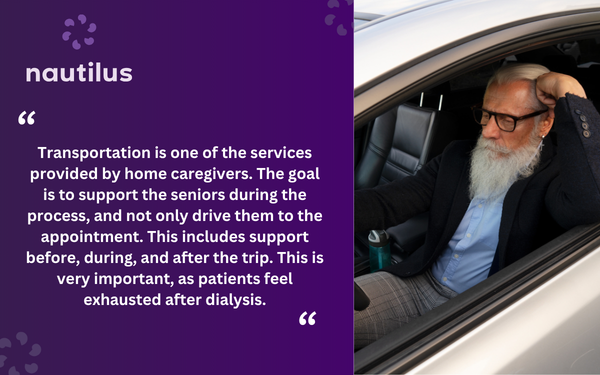
Transportation is one of the services provided by home caregivers. The goal is to support the seniors during the process, and not only drive them to the appointment. This includes support before, during, and after the trip. This is very important, as patients feel exhausted after dialysis.2

​For example, Margaret lives near Mizner Park and attends dialysis several times each week. Her daughter works full-time and used to rearrange her schedule every time Margaret had an appointment.​

The problem was not simply the driving. Margaret needed help getting ready. Also, she was often exhausted and did not feel comfortable walking from the clinic to a waiting car by herself.​

Her daughter arranged home care. The caregiver arrived at Margaret’s home, helped her get ready, checked that she had her belongings, and accompanied her to the vehicle.

​After the appointment, the caregiver was there to meet her, help her into the vehicle, and bring her home safely. That is what makes caregiver transportation different from simply calling for a car.

Transportation Option What It Provides Best For Important Considerations
Home Caregivers Door-to-door transportation plus help getting ready, mobility assistance, carrying belongings, accompaniment, and support after returning home. Seniors who need personal assistance before, during, or after dialysis. Transportation can be incorporated into a broader care plan that includes personal care, meals, companionship, errands, and light housekeeping.
Safe Travels Transportation Scheduled non-emergency medical transportation, including wheelchair-accessible transportation and assistance for passengers with mobility needs. Patients who need recurring transportation to dialysis and may have mobility needs. Families can establish a regular schedule for recurring dialysis appointments.
MedCare Shuttle Scheduled transportation for medical visits, including dedicated and shared rides. Seniors who no longer drive and need scheduled transportation to dialysis. The article states that drivers are trained and licensed by the county.
Palm Tran Connection Shared-ride transportation through Palm Beach County for eligible residents. Eligible residents who qualify for ADA or Transportation Disadvantaged services. Eligibility requirements apply. Applications and supporting documentation may be required depending on the program.
Medicaid / Medicare Advantage Benefits Some plans provide non-emergency transportation benefits for medical appointments. Eligible seniors whose insurance or Medicaid benefits include transportation. Coverage, scheduling requirements, transportation providers, and ride rules vary. Patients should confirm benefits with their plan.
Uber Health Allows healthcare organizations to arrange rides for patients, including multiple rides scheduled in advance. Seniors who are comfortable using a standard vehicle and do not require hands-on assistance. Patients do not need the Uber app or a smartphone, but a standard ride does not provide the personal assistance offered by a caregiver.
Dialysis Center Transportation Some dialysis centers provide transportation directly to and from treatment. Patients whose dialysis center offers a suitable transportation program. Ask about availability, costs, advance scheduling, service area, and accommodations for walkers or wheelchairs.

​

Door-to-Door Support

A caregiver does not simply meet a senior at the curb. They help them from the home to the appointment and back. That includes walking with the senior to the vehicle, assisting with mobility, carrying personal belongings, and making sure the senior is settled comfortably.

​If a senior moves slowly or feels unsteady, they don’t have to rush because the driver is waiting. The caregiver gives them the time they need.

​

Help After Dialysis

The trip home is important because dialysis patients feel tired after treatment. Basically, they need help getting from the vehicle to their front door. We have worked with families where the biggest relief was knowing that their loved one would not be dropped off alone after dialysis.

​A son is living in Delray Beach while his mother lives in Boca Raton. He wants to help with her dialysis appointments but could not drive down several times a week because of his work schedule.

​A caregiver filled that gap. Her son no longer had to worry about whether she had gotten to dialysis safely.

​

Consistency Matters

Seniors get assigned the same caregiver for each visit. They become familiar with the person helping them. This is important for older adults who feel anxious about unfamiliar drivers or complicated transportation arrangements.

​The caregiver already knows their routine, so the senior doesn’t have to explain everything.

​

Caregivers Help Families Stay Involved Without Doing Everything

Family members want to stay involved in a senior’s care. But they have jobs, children, appointments, and responsibilities of their own3. A daughter in Boca Raton doesn’t have to miss an important meeting because she needs to drive her father to the appointment. A son living in Fort Lauderdale does not have to make several trips to Boca Raton every week.

​The caregivers do the transportation, but the family stays involved in other ways.

​

Transportation Is Part of a Larger Care Plan

Transportation is part of a broader home care plan that also includes light housekeeping, meal preparation, companionship, personal care, and errands. This is intended for seniors who need more than just a ride.

​The caregiver can accompany a senior to dialysis in the morning and then help with a few basic tasks after returning home. The seniors can rest after the appointment and restore their energy.

​

Safe Travels Transportation

This is one of the non-emergency transportation options in Boca Raton. Unlike an ambulance that covers medical emergencies, this covers scheduled medical visits.

​Safe Travels Transportation provides dialysis transportation in Boca Raton and throughout Palm Beach County4. This company states they offer wheelchair-accessible transportation and assistance for passengers with mobility needs.

​Plus, the family can establish a regular schedule with the transportation provider so the senior doesn’t have to arrange each trip separately. This is very useful for those who have the same dialysis schedule every week.

Safe Travels Transportation Palm Beach County

​

MedCare Shuttle

MedCare Shuttle offers transportation to dialysis in Boca Raton. They provide scheduled transportation for medical visits, including dedicated and shared rides. The drivers are trained and licensed by the county.5

​If seniors no longer feel like driving, this is a great option.

MedCare Shuttle Service

​

Palm Tran Connection

Palm Tran Connection is a shared-ride transportation program for eligible residents. It is provided by Palm Beach County. Eligibility depends on the specific program.6

​Palm Tran states that ADA service requires an application and is available to people whose disability prevents them from using fixed-route bus service. The Transportation Disadvantaged program also requires an application and supporting documentation.

​If you’re considering this option, it is important to apply and confirm eligibility.

https://www.palmtran.org/our-services/connection/

​

Insurance and Medicaid Transportation Benefits

Some seniors also have transportation benefits through Medicaid or certain Medicare Advantage plans. Florida Medicaid covers medically necessary non-emergency transportation. This is for eligible recipients who have no other available means of transportation to covered services.7

​If you have Medicaid, get informed. Call the number on your insurance card and ask specifically about non-emergency medical transportation for recurring dialysis appointments.

​If you have a Medicare Advantage plan, ask whether transportation is included in your specific benefits9. Coverage and ride rules vary by plan.8

​For example, a senior qualifies for transportation but still needs to arrange rides several days in advance. Another plan may use an assigned transportation company. Make sure to understand the details to get to the appointment on time.

​

Uber Health

Many seniors feel overwhelmed by using smartphone apps. But Uber Health gives healthcare organizations another way to arrange rides for patients.10

​Healthcare staff or care coordinators can schedule rides for patients, including multiple rides in advance. Patients do not need to have the Uber app or even a smartphone to use an Uber Health ride.

​Actually, this is a good option for seniors who are comfortable with a standard vehicle but do not drive. But if they need additional assistance, it isn’t included. A standard ride is different from a caregiver who walks into the home, assists with mobility, waits for the patient, and helps them get settled after treatment.

​

Transportation Provided by the Dialysis Center

Before arranging a private transportation service, ask the dialysis center if it provides transportation for patients. Some dialysis centers offer transportation as part of their patient services. This makes the process so much easier for you.

​For example, Crown Dialysis Center of Palm Beach in Boca Raton advertises door-to-door transportation for dialysis patients in Boca Raton and surrounding areas11. The service helps patients get from home to their dialysis appointments and back home again.

​Before assuming that everything is sorted out, ask the clinic. Find out whether transportation is available for every dialysis appointment, whether there is a cost, and how far in advance rides need to be scheduled. Also ask whether the vehicle accommodates walkers or wheelchairs if your loved one needs mobility assistance.

​

Choosing the Right Dialysis Transportation

Choosing transportation to dialysis in Boca Raton isn’t only about the vehicle. Look at your loved one’s needs and preferences.

​The truth is that dialysis is a regular commitment. Long story short, the transportation service needs to fit into the senior’s routine.

​You should always start with their level of mobility.  If your loved one walks independently, they can go with non-emergency medical transportation options. But if they use a walker, they need assistance getting in and out of the vehicle.

​Reliability is another important factor. Dialysis appointments follow a regular schedule, often several days a week. Choose a service that handles recurring appointments and has a clear process for scheduling each trip.

​

Final Thoughts

If your loved one needs transportation to dialysis in Boca Raton, our home caregivers are here to help. We provide support around medical appointments and help seniors get safely from home to their appointments and back again.

​Home care is meant to allow the senior to proceed with their daily routines. The caregiver is present and helps them regain their confidence.

​Contact us today and schedule your consultation.

Frequently Asked Question Answer
What transportation options are available for dialysis patients in Boca Raton? Options include home caregiver transportation, non-emergency medical transportation providers, Palm Tran Connection, eligible insurance transportation benefits, Uber Health, and transportation offered by some dialysis centers.
Can a home caregiver drive a senior to dialysis? Yes. Transportation can be part of home caregiver services. A caregiver may also assist the senior with getting ready, mobility, belongings, entering and exiting the vehicle, and getting safely settled at home afterward.
Why might caregiver transportation be helpful after dialysis? Dialysis patients can feel tired after treatment. A caregiver can meet the senior, assist them to the vehicle, bring them home, and help them safely get inside and settled.
Are wheelchair-accessible dialysis rides available in Boca Raton? The article identifies Safe Travels Transportation as offering wheelchair-accessible transportation and assistance for passengers with mobility needs. Families should confirm specific accommodations when scheduling.
Does Palm Tran Connection provide transportation to dialysis? Palm Tran Connection provides shared-ride transportation for eligible residents. Eligibility depends on the program, and an application and supporting documentation may be required.
Does Medicaid cover transportation to dialysis in Florida? Florida Medicaid may cover medically necessary non-emergency transportation for eligible recipients who have no other available means of transportation to covered services. Patients should confirm their specific benefits and scheduling requirements.
Does Medicare Advantage cover rides to dialysis? Some Medicare Advantage plans may include transportation benefits. Coverage, ride limits, scheduling rules, and transportation providers vary by plan.
Do seniors need a smartphone to use Uber Health? No. According to the article, healthcare organizations can arrange Uber Health rides for patients, and patients do not need the Uber app or a smartphone.
Do dialysis centers provide transportation? Some dialysis centers offer patient transportation. Families should ask the center about availability, cost, scheduling requirements, service areas, and accommodations for walkers or wheelchairs.
How should families choose a dialysis transportation service? Consider the senior’s mobility, the amount of assistance required, reliability, accessibility, recurring scheduling, and whether support is needed before or after the appointment.

​

References

  1. Hemodialysis – National Institute of Diabetes and Digestive and Kidney Diseases
  2. Dialysis Unit Differences in Post-Dialysis Fatigue – PubMed
  3. Transportation Services for Older Adults: What Caregivers Should Know – AARP
  4. Dialysis Treatment Transportation Services – Safe Travels Transportation
  5. Non-Emergency Medical Transportation – MedCare Shuttle
  6. Palm Tran Connection – Palm Tran
  7. Non-Emergency Transportation Services – Florida Agency for Health Care Administration
  8. Assurance of Transportation – Medicaid.gov
  9. Medicare Advantage Value-Based Insurance Design Model – Centers for Medicare & Medicaid Services
  10. About Uber Health – Uber
  11. Boca Raton Dialysis and Transportation Services – Crown Dialysis Center of Palm Beach

© Nautilus Homecare All Right Reserved. Privacy Policy.

Location

2061 NW 2nd Ave., Ste 203
Boca Raton, FL 33431 
Get Directions
LIC#NR30211080

Phone

561.637.4242

Email

info@nautilusshc.com

Available to speak 24/7

Home
Services
About
FAQs
Blog
Contact