


Multiple sclerosis is most commonly diagnosed at a young age3. Many people continue living with it into their senior years. Or, they may experience increasing symptoms with age.
Families often ask whether their loved one can continue living safely at home. In many cases, the answer is yes. Multiple sclerosis can make everyday activities more challenging. But with the right support, seniors can live comfortably and safely at home.
Home care helps with daily tasks, improving safety, reducing stress, and allowing the senior to maintain independence as much as possible.
| Key Takeaways |
|---|
| ✔ Many seniors with multiple sclerosis (MS) can continue living safely at home with the right support. |
| ✔ Home caregivers assist with mobility, personal care, meal preparation, housekeeping, and transportation. |
| ✔ Caregivers help reduce fall risks by providing mobility assistance and encouraging the safe use of mobility aids. |
| ✔ Assistance with daily tasks allows seniors to conserve energy and better manage MS-related fatigue. |
| ✔ Companionship and emotional support help reduce loneliness and improve quality of life. |
| ✔ Home care plans are flexible and can be adjusted as symptoms and care needs change over time. |
| ✔ Family caregivers benefit from respite care, helping prevent burnout while keeping loved ones safely at home. |
| ✔ Some seniors may eventually require a higher level of care if their medical or mobility needs become too complex. |
What Is Multiple Sclerosis?
Multiple sclerosis is a chronic disease that affects the brain and spinal cord. It happens when the immune system mistakenly attacks the protective covering around nerves, making it harder for the brain and body to communicate with each other.1
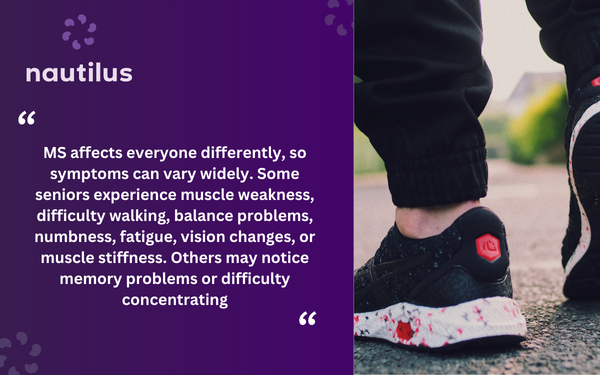
MS affects everyone differently, so symptoms can vary widely. Some seniors experience muscle weakness, difficulty walking, balance problems, numbness, fatigue, vision changes, or muscle stiffness. Others may notice memory problems or difficulty concentrating.2
For many older adults, the condition progresses slowly over time, with age, strength, balance, and energy naturally declining, which makes it harder to cope with the symptoms.
But having MS doesn’t mean that the scenario has to leave home. With proper medical care, therapy, family support, and home care services, many older adults continue living safely in familiar surroundings.4
| Home Care Service | How It Helps Seniors with MS | Benefits |
|---|---|---|
| Mobility Assistance | Helps with walking, transfers, stairs, and safe use of mobility aids. | Reduces fall risk and improves confidence moving around the home. |
| Personal Care | Assists with bathing, dressing, grooming, toileting, and getting in and out of bed. | Maintains dignity, hygiene, and independence. |
| Fatigue Management | Caregivers take over physically demanding daily tasks. | Conserves energy for therapy, hobbies, and family time. |
| Meal Preparation | Prepares nutritious meals, snacks, and encourages hydration. | Supports strength, overall health, and proper nutrition. |
| Housekeeping | Handles cleaning, laundry, grocery shopping, and other chores. | Reduces physical strain and creates a safer home. |
| Medication Reminders | Provides reminders to follow medication schedules. | Promotes consistency and reduces missed doses. |
| Transportation | Drives seniors to medical appointments and therapy sessions. | Improves access to healthcare and reduces family stress. |
| Physical Activity Support | Encourages safe walking and therapist-recommended exercises. | Helps maintain strength, flexibility, and mobility. |
| Companionship | Provides conversation, emotional support, and social engagement. | Reduces loneliness and improves emotional well-being. |
| Monitoring Changes | Observes changes in mobility, appetite, mood, or daily function. | Allows families and healthcare providers to respond sooner. |
| Respite Care | Gives family caregivers time to work, rest, or manage personal responsibilities. | Prevents caregiver burnout while keeping families involved. |
| Flexible Care Plans | Services can expand as symptoms and care needs change. | Allows seniors to remain safely at home for as long as possible. |
| When Home May No Longer Be Safe | Severe mobility limitations, complex medical needs, or significant cognitive decline may require higher-level care. | Ensures the senior receives the appropriate level of support. |
How Home Care Helps Seniors with Multiple Sclerosis Stay at Home
Home care provides assistance at the place where seniors feel most comfortable. Professional caregivers help with mobility, personal care, household chores, and other areas where needed.
Helping with Mobility and Preventing Falls
Many seniors with MS experience weakness, poor balance, and muscle stiffness5. This makes walking more difficult. Even moving from the bedroom to the kitchen or standing up from a chair can become tiring or unsafe.
A caregiver can support mobility. They help with simple walks around the home, transfers from bed to a chair, or stair use. They can also encourage the use of walkers, canes, or other mobility devices recommended by healthcare providers.
For example, a senior may feel steady in the morning. But they may become much weaker by late afternoon because fatigue is a common symptom of MS. Having someone present during the difficult hours can reduce the risk of falls.
Assisting with Personal Care
Muscle weakness, numbness, or limited coordination affect everyday movements. This makes simple routines like showering and getting dressed more frustrating.
A home caregiver can assist with bathing, dressing, grooming, toileting, getting in and out of bed, and moving safely around the bathroom. The goal isn’t to take over completely. Instead, caregivers encourage them to complete the parts they can safely manage while helping with the tasks that have become too difficult.
This approach helps preserve independence and dignity.
Managing Fatigue Throughout the Day
Fatigue is one of the most common symptoms of multiple sclerosis. And it isn’t the same as ordinary tiredness6. Many seniors describe feeling completely drained after activities that once seemed simple, such as preparing breakfast or taking a shower.
Home care takes over the practical tasks so seniors can conserve their energy for the activities that matter.
For example, the caregiver prepares meals, does laundry, and handles housekeeping. The senior can use that energy for physical therapy, hobbies, spending time with family, or simply enjoying their day instead of exhausting themselves with chores.
Preparing Meals and Supporting Good Nutrition
Standing at the stove, carrying heavy pots, or chopping ingredients may become difficult. A caregiver can prepare nutritious meals, organize snacks, and make sure the senior stays hydrated throughout the day.
Proper nutrition is important because a healthy diet helps support overall health, maintain strength, and reduce the risk of additional health problems that can make MS symptoms harder to manage.7
For example, a senior started to skip lunch because cooking felt overwhelming. After arranging home care, they can enjoy a homemade meal without feeling exhausted.
Helping with Household Tasks
As MS progresses, many household chores become physically demanding. Vacuuming, carrying laundry, changing bed linens, grocery shopping, or cleaning bathrooms require more strength.
A caregiver can handle these responsibilities, so the senior stays safe and doesn’t overexert. This makes everyday life less stressful.
Providing Medication Reminders
Seniors with MS often take several medications, either for the symptoms or other health conditions. Keeping track of medications can become difficult, especially if fatigue or memory changes are present.
The caregiver can provide gentle reminders and help maintain a consistent routine. This can reduce the chances of missed doses.
Providing Transportation to Appointments
Seniors with MS often have appointments with neurologists, primary care physicians, physical therapists, or other specialists.
But, driving is no longer safe or comfortable because seniors have problems with vision, strength, or slower reaction times.
A caregiver can assist with transportation and accompany the senior to appointments, helping reduce stress for both the senior and their family.
Encouraging Safe Physical Activity
MS can make movement difficult. But seniors are encouraged to stay active within their abilities to maintain strength and flexibility.
A caregiver can encourage seniors to stay active by supporting short walks, helping with simple exercises recommended by their physical therapist, or accompanying them outdoors when appropriate.
For example, a senior felt nervous walking outside alone. But with a caregiver, they enjoyed taking short walks around the neighborhood. Knowing someone is there for support provides the reassurance they need.
Providing Companionship and Emotional Support
Living with a chronic condition can feel isolating. Some seniors stop participating in activities because they worry about falling, becoming tired, or needing help.
Over time, this may lead to loneliness. But the caregiver provides more than practical help. They offer conversation, encouragement, and companionship throughout the day. Sharing meals, playing cards, watching a favorite television program, or simply talking over coffee can help seniors feel more connected.
Watching for Changes
MS symptoms can change over time. Also, seniors can develop other unrelated health conditions that come with age. A caregiver who sees the senior regularly may notice changes in mobility, appetite, mood, energy, or daily functioning.
We always highlight the fact that caregivers don’t diagnose medical conditions. But they can spot changes and communicate concerns to family members and healthcare providers. This helps address the problems quickly.
For example, a senior who usually walks comfortably around the home suddenly struggles much more than usual. The caregiver shares this with the family so they can contact their healthcare provider.
Giving Family Caregivers a Break
Spouses and adult children are the primary caregivers. Over time, balancing caregiving with work, parenting, and personal responsibilities can become overwhelming.
Home care allows family members to step away for a few hours knowing their loved one is receiving compassionate support.
For example, one daughter arranged caregiver visits while she’s at work. She doesn’t worry throughout the day, knowing her parents are well taken care of. Also, she can spend quality time with her father in the evenings instead of doing household chores.
This helps prevent burnout while keeping families involved in caregiving.
Providing Flexible Support as Needs Change
Home care is flexible and can adjust to the changing needs of this condition. A senior may begin with just a few hours of help each week for housekeeping and meal preparation.
As symptoms progress, care can gradually expand. In coordination with the team, the care plan can include personal care, mobility assistance, transportation, or companionship.
Families don’t have to commit to more cars than their loved ones need at the moment. The services can be adjusted as circumstances change. With this, the senior can remain at home as long as possible.
When Living at Home May No Longer Be Safe
There are situations where living at home may no longer be the safest option. Thai and so how the condition affects their daily life, and whether care needs can safely be managed at home.
For example, a senior may require a higher level of care if they become completely dependent on others for transfers. Or they have complex medical needs that require around-the-clock skilled nursing. Also, cognitive changes require supervision.
Final Thoughts
The MS diagnosis doesn’t have to mean that the sniper should immediately form into a nursing home or assisted living facility. Many older adults continue living safely and comfortably at home for years with the right approach.
Home caregivers reduce many of the daily challenges that MS creates in daily life. They help with mobility, personal care, meals, household chores, transportation, and companionship.
The value of home care is seen in maintaining routines, independence, and remaining in familiar surroundings.
If you’re exploring home care options, we’re here to talk. Schedule a consultation today and find out how we can help you.
| Frequently Asked Question | Answer |
|---|---|
| Can seniors with multiple sclerosis live safely at home? | Yes. Many seniors with MS can continue living safely at home with proper medical care, family support, and professional home care services. |
| How does home care help someone with MS? | Home caregivers assist with mobility, personal care, meal preparation, housekeeping, medication reminders, transportation, and companionship. |
| Can home care reduce the risk of falls? | Yes. Caregivers provide mobility assistance, help with transfers, and encourage the safe use of walkers, canes, and other mobility aids. |
| Does home care help manage MS-related fatigue? | Yes. By taking over physically demanding household tasks, caregivers help seniors conserve energy for the activities they enjoy most. |
| Can caregivers provide medical treatment for MS? | No. Home caregivers do not diagnose or provide medical treatment, but they can monitor changes and communicate concerns to family members and healthcare providers. |
| When might home no longer be the safest option? | If a senior requires around-the-clock skilled nursing, has complex medical needs, or experiences significant cognitive decline, a higher level of care may be necessary. |
References
- MedlinePlus – Multiple Sclerosis
- Mayo Clinic – Multiple Sclerosis: Symptoms and Causes
- National Institute of Neurological Disorders and Stroke (NINDS) – Multiple Sclerosis
- National Multiple Sclerosis Society – What Is MS?
- Falls in People with Multiple Sclerosis
- Fatigue in Multiple Sclerosis: Mechanisms, Evaluation, and Treatment
- Brain & Life – How to Manage MS-Related Fatigue