


With age, everyday tasks don’t feel as easy as they used to. Getting dressed takes longer, and cooking feels exhausting. At a certain point, living alone may no longer feel safe.
Even so, many seniors don’t want to leave their homes. It is the place where they have established their routines and created memories. Home care helps you stay where you feel most comfortable. We step in to make life safer and easier for you.
Key Takeaways
- In-home care allows seniors to remain in familiar surroundings while receiving daily support.
- Caregivers assist with personal care, meals, medication reminders, housekeeping, and transportation.
- Home care promotes independence instead of taking control away from seniors.
- Companionship services reduce loneliness and improve emotional wellbeing.
- Families stay actively involved in care decisions and communication.
- Preventative support helps reduce falls, missed medications, and avoidable hospital visits.
- Personalized care plans adapt to routines, preferences, and changing needs over time.
What Is In-Home Care?
In-home care means that a trained caregiver comes to your home and helps with daily activities. That’s it. There is no moving to facilities or drastic changes. Life remains the same but feels easier.
Our caregivers provide support, right where you are. They help with:
- Getting dressed
- Bathing safely
- Preparing meals
- Taking medications on time
- Light housekeeping
- Getting to appointments
- Companionship and conversation
Many worry about losing their independence and sense of self. But with in-home care, you stay in control of your day. We are just there to support you.
| Service or Benefit | How It Helps Seniors | Main Advantage |
|---|---|---|
| Personal Care | Assistance with bathing, dressing, grooming, and mobility | Maintains dignity and safety |
| Companion Care | Conversation, activities, walks, and emotional support | Reduces loneliness and isolation |
| Meal Preparation | Cooking healthy meals and assisting with dietary needs | Supports nutrition and energy levels |
| Medication Reminders | Gentle reminders to take medications on time | Encourages consistent routines |
| Light Housekeeping | Laundry, dishes, organization, and basic cleaning | Creates a safer living environment |
| Transportation & Errands | Transportation to appointments, shopping, and social outings | Keeps seniors connected to the community |
| One-on-One Attention | Care customized around routines and preferences | More personalized support |
| Preventative Safety Support | Fall prevention, mobility support, and home safety awareness | Helps avoid emergencies and hospital visits |
In-home Care Services in Boynton Beach
Personal Care
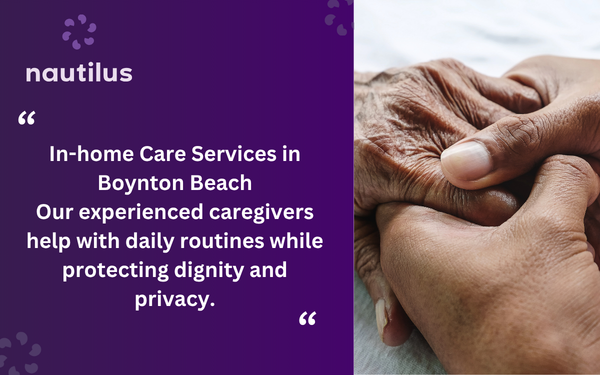
Our experienced caregivers help with daily routines while protecting dignity and privacy.
- Bathing and grooming
- Dressing
- Toileting assistance
- Help with walking and moving safely
Companion Care
No one should feel alone. Caregivers stop by for friendly conversation, walks, light activities, and help with hobbies. They encourage seniors to engage in social interaction and take them to social events.
Meal Preparation
Seniors often skip meals because cooking is overwhelming. Our caregivers cook simple and healthy meals that nourish their bodies. They also help with dietary needs and handle the cleanup.
Medication Reminders
Our caregivers gently remind seniors about medication. They help maintain a routine and ensure the doses are taken on time.
Light Housekeeping
A clean space maintains a healthy environment and prevents falls. Caregivers help keep the home organized and safe, but also do laundry, dishes, and basic cleaning.
Transportation and Errands
We help your loved one stay connected with daily life in Boynton Beach. Caregivers take seniors to grocery stores, malls, and social events so they don’t feel isolated. They also help with doctor visits.
Why Families in Boynton Beach Choose Care at Home
Boynton Beach is a beautiful place to live. The warm weather, familiar streets, and palm trees feel like home. That’s why many seniors choose to stay at home instead of moving to a facility.
They Stay in a Familiar Environment
A familiar environment feels comfortable. Simple things like the chair by the window and the neighborhood feel grounding. They know where things are kept and how the daily routine flows. This is very important for seniors, especially those with memory issues. Familiar surroundings help reduce anxiety and confusion.
It Avoids the Stress of a Big Life Change
Moving to a facility isn’t just a physical move for seniors. It is deeply emotional. Families often underestimate how difficult it is to leave a home full of memories. Also, adjusting to new rules and schedules feels like losing control over their life.
With in-home care, there are no disruptions to everyday life. Your loved one keeps their space, routines, and their sense of control.
They Get One-on-One Attention
In care facilities, staff members are responsible for multiple residents at the same time. That means less time per person and limited flexibility.
Home care is focused entirely on your loved one. The caregiver adjusts their approach according to the senior’s needs and preferences. They move at their own pace and adjust their day based on how they feel. Plus, they pay attention to the small changes and notify the family members.
You Stay Involved in Their Care
Families are often concerned about losing visibility. When your loved one moves to a facility, you rely on updates from the staff. The visits are limited by schedules.
With in-home care, families stay involved. You can visit anytime and speak directly with the caregiver. Another thing that families appreciate is that they participate in daily decisions.
Think of it as having someone there to help with the practical tasks, but you are still there for emotional support and sharing meaningful moments.
It Supports Independence Instead of Taking It Away
Many seniors resist care because they’re afraid of losing their independence. Yet, in-home care supports independence rather than taking it away. Caregivers are trained to encourage seniors to do what they can and step in when necessary. Seniors still stay active in their own lives, but have the needed support to do things safely.
It Helps Prevent Accidents Before They Happen
It is common for families to seek help after something goes wrong. This usually happens after a fall, missed medication, or a hospital visit.
Actually, in-home care works best as prevention. Having someone there regularly ensures medications are taken correctly and mobility is supported. Caregivers also assess the home for risks and suggest improvements. Ultimately, they help avoid bigger problems.
It Reduces Loneliness and Isolation
Many seniors spend long hours alone. Family members are living out of state. Over time, isolation can lead to low mood, less motivation, and a decline in physical and mental health.
Despite practical help, a caregiver also brings presence. Things like conversation, shared meals, and small daily interactions make a difference in their day.
It Fits the Lifestyle of Boynton Beach
Life in Boynton Beach has its own rhythm. Seniors enjoy the warm weather and slower pace. There are local doctors and pharmacies. Plus, the familiar routines have been part of your loved one’s life for years.
Home care adjusts to their lifestyle and not the other way around. Your loved one can sit outside when the weather is nice. They keep their usual schedule for meals, TV, and socialization. Plus, they stay connected to the local community they belong to for years.
With in-home care, nothing feels forced.
It Brings Peace of Mind to the Whole Family
You don’t have to carry everything alone. Families know someone is there regularly. You know your loved one is safe and their daily needs are met. This is the reassurance you need.
This allows you to step away without constant worry. You can take some time to recharge or take care of personal responsibilities.
Our Approach: Care That Feels Human
When families reach out, they aren’t just booking a list of services. They need someone they can trust with a person they love. That’s a different responsibility.
We Start by Listening
During the initial consultation, we take time to understand your situation. We ask different questions.
- What does a normal day look like for your loved one?
- What are they comfortable with, and what are they not?
- What worries you the most right now?
We don’t rush this part. We believe that good care doesn’t start with a schedule, but with understanding how someone actually lives.
We Respect Routines, Not Replace Them
One of the biggest fears seniors have is losing control over their day. So we don’t come and set up a schedule. We work around their needs, habits, and preferences.
For example, if they like breakfast at a certain time, we keep that. If they prefer things done a certain way, we follow that. Our caregivers adjust to them, and not the other way around.
We Move at Their Pace
Some days are better, but others are slower. There is no rush to get things done. If getting dressed takes a little longer, that’s okay. If they want to sit and talk before starting the day, that’s okay too.
We Focus on Dignity in Every Moment
Small things matter more than people think. The way someone is spoken to is important, as well as how help is offered. Seniors want to feel included and not managed.
We speak to your loved one with respect. They are asked, not told. Basically, they feel in control of their own choices. Caregivers provide help, but seniors never feel like they’ve lost their voice.
| Frequently Asked Questions |
|---|
|
How many hours of care are usually needed? Care schedules vary depending on individual needs. Some families begin with a few hours weekly, while others require daily assistance. |
|
Can care schedules change over time? Yes. In-home care is flexible and can be adjusted as needs evolve, including adding visits or changing hours. |
|
Is in-home care only for physical assistance? No. In-home care also includes emotional support, companionship, conversation, and social interaction. |
|
Why do seniors prefer care at home? Remaining at home allows seniors to maintain familiar routines, stay comfortable, and preserve independence. |
|
Does home care help families too? Yes. Families gain peace of mind knowing someone is regularly helping their loved one and monitoring their wellbeing. |