


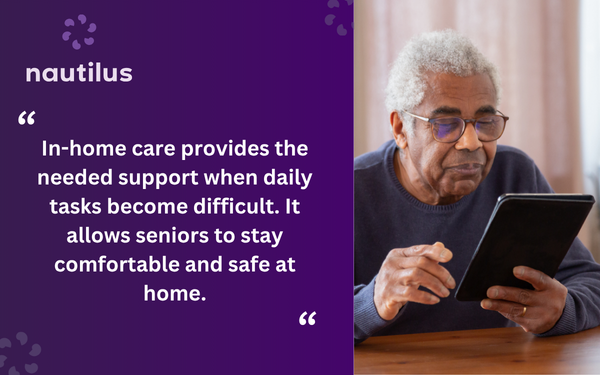
If you’re caring for someone who is recovering from a surgery, deals with chronic conditions, or has difficulties due to aging, you know the struggle. In-home care provides the needed support when daily tasks become difficult. It allows seniors to stay comfortable and safe at home.
Many families know they need help, but they may not be sure about where to start. There are a lot of things to consider, such as cost, caregiver qualifications, insurance coverage, and finding a trusted agency. These make the process overwhelming.
The real point is that arranging home care is simpler than you might expect. We share a detailed guide that will help you navigate your situation.
| Key Takeaway | Explanation |
|---|---|
| Start With a Care Needs Assessment | Understanding daily challenges and required assistance helps determine the appropriate level of care and caregiver qualifications. |
| Explore All Payment Options | Private pay, long-term care insurance, Medicare, Medicaid, and veterans benefits may help cover costs depending on eligibility. |
| Choose the Right Hiring Approach | Families can hire independently for more control or work with an agency for convenience and ongoing support. |
| Care Plans Should Be Personalized | A customized care plan ensures services, schedules, and caregiver responsibilities match the client’s needs. |
| Communication Is Essential | Regular communication with caregivers and agencies helps adjust care as needs change over time. |
| Home Care Supports Family Involvement | Professional caregivers provide assistance while allowing families to focus on spending meaningful time with loved ones. |
Assess Your Specific Care Needs
The first step is to understand exactly what you need. The level of care needed determines the cost, schedule, and caregiver qualifications.
Start by noticing the daily activities that have become difficult. For some people, needs are simple. An older adult is independent, but they need help with grocery shopping and cooking. Others may need housekeeping and transportation to appointments.
Or, you have noticed unpaid bills, spoiled groceries in the fridge, and the house isn’t as tidy as usual. Services would include light housekeeping, help with errands, and preparing meals.
Some individuals require more involved care that includes bathing, dressing, toileting, or mobility.
Still, some need specialized support. A person with dementia needs supervision throughout the day. This ensures safety.
Someone recovering from surgery may need assistance for a few weeks.
Creating a list of the things your loved one needs help with is crucial for the consultation process. Agencies can better understand your situation and offer the support that fits your needs.
| Stage | Key Details | Examples / Considerations |
|---|---|---|
| Assess Care Needs | Identify daily activities that require assistance. | Meal preparation, housekeeping, transportation, bathing, dressing, mobility support, dementia supervision. |
| Understand Costs | Costs depend on location, care hours, service level, and specialized support. | Compare payment methods and available benefits. |
| Private Pay | Families pay directly for services. | Maximum flexibility in caregiver selection and scheduling. |
| Long-Term Care Insurance | May cover home care services depending on the policy. | Review benefits and verify coverage with the insurer. |
| Medicare & Medicaid | Coverage varies based on eligibility and medical necessity. | Medicare generally covers medically necessary services; Medicaid varies by state. |
| Veterans Benefits | Financial assistance may be available for veterans and spouses. | Explore multiple veteran support programs. |
| Private Caregiver | Often lower cost with full hiring control. | Families handle recruiting, screening, taxes, scheduling, and backups. |
| Home Care Agency | Agency manages caregiver hiring, training, and scheduling. | Provides ongoing support and caregiver replacements when needed. |
| Research Agencies | Review agency reputation and client feedback. | Focus on communication quality and service experience. |
| Consultation | Discuss health conditions, schedules, and care requirements. | Most agencies offer free consultations. |
| In-Home Assessment | Evaluate living conditions, mobility, and safety concerns. | Opportunity to clarify expectations and ask questions. |
| Personalized Care Plan | Customized outline of services, schedules, and responsibilities. | Includes personal preferences and special instructions. |
| Caregiver Matching | Match based on skills, experience, and personality. | Families can request changes if needed. |
| Ongoing Communication | Regular updates and adjustments to care plans. | Care can increase as needs evolve. |
| Common Challenges | Emotional concerns and family disagreements are common. | Address guilt, communication gaps, and differing opinions proactively. |
Understand the Cost of In-Home Care and Payment Options
Cost is often the biggest concern. The price for in-home care varies depending on location, the number of hours needed, the level of care required, and whether specialized services are involved.
When it comes to funding, families have different options.
Private Pay
Many families pay for care themselves. This allows maximum flexibility, as you can choose the caregiver, schedule, and services that fit your needs. Insurance companies limit your provider options because they only work with approved agencies.
Long-Term Care Insurance
Long-term insurance policies may cover home care. But coverage varies significantly. It turns out you need to review your benefits and contact your insurance company to understand what’s covered. They may not cover all in-home care services.
Medicare and Medicaid
Medicare covers home health services only when medically necessary. Continuous support isn’t covered.
Medicaid programs may offer assistance if eligibility requirements are met. The benefits vary by state.
Veterans Benefits
Veterans and their spouses may qualify for benefits that help cover in-home care. There are different veterans’ programs, and you may be eligible for more than one.
Decide Between Hiring a Private Caregiver or Working With a Home Care Agency
When families understand their budget and needs, next comes deciding who to hire. You have two options: independent caregivers or a licensed home care agency.
Both have advantages. Hiring a private caregiver costs less. There is no agency fee, and you have full control over caregiver selection.
Here’s the thing: it comes with additional responsibilities. Families will handle the whole process from start to finish. They find candidates, do the screening, background checks, interviews, schedule, taxes, and find a replacement if they are unavailable.
Often, caregiving is exhausting for family members, and they have no time to do all of this.
Working with a licensed home care agency is often easier. Families are supported throughout the whole process.
Agencies complete the interviews, screening, qualification verification, background checks, training, and manage scheduling. If a caregiver is unavailable, they are responsible for finding a replacement.
For many, choosing an agency is a more practical choice. For example, a daughter wants to arrange care for her aging father. She is working full-time and has a family, so she has no time for the administrative tasks. She hires a local in-home care agency. They handle the process, and she contacts them for everything.
How to Get In-home Care
Research
Since agencies guide families through the process, they are often the first choice. The first step is finding a reputable agency in your area. Do a quick search online and check the reviews. Look for more beyond the star rating. Read the comments to find out more about their communication and experience. This allows you to understand how they serve their clients.
Consultation
Once you have selected a few home care agencies, schedule consultations. Most will offer a free consultation, where they discuss your situation with you. They will also take time to explain their services and costs.
Be prepared to share details about your loved one’s health condition, daily challenges, care needs, preferred schedule, and special requirements.
During this stage, assess their style of communication. The agency coordinator should be attentive and not rush over the important details.
In-home Care Assessment
After the initial consultation, you know which agency will be your choice. The next step is scheduling an in-home care assessment. They will evaluate the client’s living environment, mobility, safety concerns, and level of assistance required.
At this point, feel free to ask any questions. You can discuss the expectations.
Personalized Care Plan
After the assessment, the agency creates a care plan. It fully aligns with your needs and expectations. It outlines the services provided, the schedule, caregiver responsibilities, and instructions. They will also include any special preferences.
Matching
The in-home care agency uses the available information to find the right caregiver. The skills, experience, and personality need to be a good fit. A caregiver is present in the person’s life, and compatibility matters.
Families can request adjustments if the caregiver isn’t the right match. For example, an aging parent is an extroverted person who loves social interactions. The agency matches them with a caregiver with the same dynamics. The companionship services focus on conversations and playing card games.
The first visit is very important. Naturally, the client may still feel hesitant. But with time, this will be replaced by mutual trust.
Pay attention to how your loved one responds to them. They should feel comfortable with the caregiver. Another thing to keep in mind is improvement. See how their quality of life improves with home care. For example, a client was struggling with meals. They skipped meals because cooking was tiring. Now, the caregiver prepares nutritious meals, and they eat regularly.
Continuous Communication
The process doesn’t stop after finding the right caregiver. Services begin, and the agency maintains regular communication. You can check in with the caregiver anytime.
As needs change, the plan can be adjusted. For example, the client’s memory-related condition progresses. The family and agency agree that they need full-time supervision.
Common Challenges When Arranging In-Home Care
Arranging home care isn’t an easy decision. It is emotional and personal. Many families go through the same challenges before they find the option that works.
Guilt is one of the strongest emotions. Many adult children feel guilty letting another person take care of their loved one. Even though they are tired. Often, families juggle work, child care, or live in another state. The idea of arranging home care may feel like stepping back from their responsibility.
But getting a caregiver isn’t replacing family involvement. You can have peace of mind knowing your loved one is safe and comfortable. Now, you can spend quality time with them instead of doing practical tasks.
For example, a daughter lives out of town and visits her mother on weekends. She helps with groceries and cleaning. But her mother needs everyday assistance. At first, she felt guilty because she couldn’t offer daily help. But she realized that her mother would be supported every day, not just on visits.
Others may struggle with family disagreement. Siblings may approach this issue differently. One may believe the parent is still managing everyday tasks well. For them, getting help is unnecessary at this point.
Another might feel that care should start immediately. They noticed mobility issues and were worried about falls. At this point, conversations may be tense.
Final Thoughts
In-home care is a major decision for families. But breaking it down to simple steps helps make the process less overwhelming. Analyze your situation and identify the type of help you need. Speak with your agency and listen to their suggestions.
If your family member needs help, we are here to assist. Contact us now and schedule your consultation.
| Question | Answer |
|---|---|
| How do I know if my loved one needs in-home care? | Signs include difficulty with daily activities, missed meals, unpaid bills, poor housekeeping, mobility challenges, or increasing safety concerns. |
| What services can in-home caregivers provide? | Services may include companionship, meal preparation, housekeeping, transportation, personal care, medication reminders, and dementia support. |
| Does Medicare pay for in-home care? | Medicare generally covers medically necessary home health services but does not typically pay for ongoing non-medical personal care or companionship services. |
| Is it better to hire a private caregiver or a home care agency? | Private caregivers may cost less, while agencies handle screening, training, scheduling, and caregiver replacements, making the process easier for families. |
| What happens during an in-home care assessment? | The agency evaluates the client’s living environment, health condition, mobility, safety concerns, and level of assistance required. |
| Can a care plan be changed later? | Yes. Care plans are flexible and can be adjusted as health conditions, schedules, or care needs evolve. |
| How long does it take to arrange in-home care? | The timeline varies, but many agencies can complete consultations, assessments, and caregiver matching within a few days. |
| What if the caregiver is not a good fit? | Families can communicate concerns with the agency and request a different caregiver if necessary. |