


At a certain point, the routines of seniors change. This doesn’t happen overnight. Instead, it is the small changes that are easy to miss at first.
The meals take longer, and portions get smaller. Seniors experience fatigue, loss of appetite, unsteady hands, or swallowing difficulties. Eating used to be a regular routine, but now it requires effort.
For many older adults, this is a quiet transition. In some cases, it is not about refusing food. This happens because the process is difficult and frustrating.
| Key Insight | Explanation |
|---|---|
| Eating difficulties are gradual | Small changes over time often go unnoticed but impact nutrition |
| Nutrition becomes more critical with age | Malnutrition can lead to serious health decline |
| Care is personalized | Support ranges from reminders to full feeding assistance |
| Safety is essential | Monitoring prevents choking and swallowing risks |
| Emotional support matters | Meals become more enjoyable with companionship |
In most cases, it feels personal rather than just a physical challenge. The senior was able to prepare food and eat without help for years.
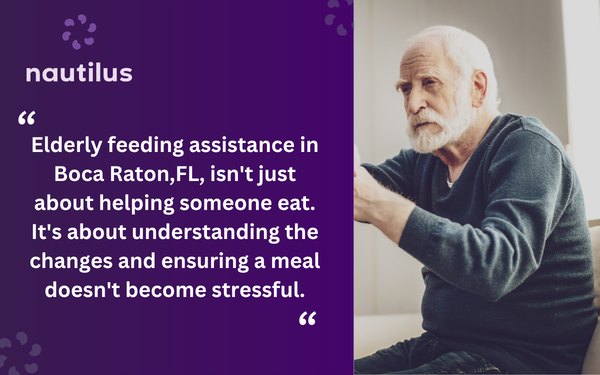
Elderly feeding assistance in Boca Raton,FL, isn’t just about helping someone eat. It’s about understanding the changes and ensuring a meal doesn’t become stressful.
When Eating Stops Being Easy
Eating is something we take for granted. For seniors, it becomes difficult with age. In Boca Raton, many older adults live independently. Feeding challenges are more common than people think. This happens for many reasons.
Individuals with Parkinson’s struggle with tremors and reduced hand control, making it difficult to control utensils. Some feel weakness or fatigue, so they may skip meals. Difficulty swallowing is another problem in older adults that makes eating uncomfortable.
Others may have dental issues or sensitive gums. And let’s not forget to mention the loss of appetite.
Because of these, eating becomes frustrating. So many seniors may eat less or skip meals.
| Category | Details | Examples / Notes |
|---|---|---|
| Common Eating Challenges | Fatigue, tremors, swallowing difficulty, dental issues, low appetite | Parkinson’s, stroke recovery, aging-related weakness |
| Purpose of Feeding Assistance | Support physical and emotional aspects of eating | Maintains dignity and reduces stress |
| Nutrition Importance | Prevents malnutrition, कमज, dehydration | Supports immunity, energy, independence |
| Safety Considerations | Monitoring choking, swallowing, posture | Encouraging small bites, upright seating |
| Levels of Assistance | Meal prep, verbal cues, partial help, full feeding, specialized care | Customized to individual needs |
| Additional Support Services | Personal care, mobility, medication reminders, companionship | Creates holistic in-home care experience |
What Elderly Feeding Assistance in Boca Raton, FL Means
Elderly feeding assistance is part of in-home care services. These are provided by experienced caregivers in the client’s home.
The goal of feeding assistance is to make meals manageable both physically and emotionally. The approach is calm and respectful. It feels familiar instead of clinical.
Elderly feeding assistance can look different for everyone. The family will talk to the in-home care agency and develop a care plan that aligns with the client’s needs. The caregiver may feed the person directly or help them feed themselves. The goal is to support them without taking over the process.
The caregiver can prepare a simple and nutritious meal that aligns with the senior’s preferences. They can cut food into smaller pieces for safety, and can also assist with utensils or provide guidance.
Seniors with mild cognitive decline can be reminded to continue eating. Safety is another important aspect, as they monitor for choking or swallowing difficulty.
Besides eating, hydration is also important. Caregivers encourage seniors to drink water regularly to prevent dehydration.
A caregiver in Boca Raton shared a moment with a client named James. He always enjoyed his meals. But after a minor stroke, he struggled with coordination. The food would fall off his fork, which resulted in frustration.
The caregiver sat with him at the table. She started cutting the food into smaller bites and gently placed the fork in his hand. James ate more and stayed at the table for longer.
Why Nutrition Matters More With Age
Proper nutrition is important for seniors. The body may absorb nutrients less efficiently, and muscle mass decreases naturally. At the same time, many experience appetite loss.
When eating becomes difficult, seniors often don’t complain. They eat less and skip meals.
While seniors eat less, their bodies still need nutritious foods. Malnutrition can affect health, resulting in muscle loss, weakness, lower immunity, low energy, and dehydration.
Feeding assistance ensures seniors stay well nourished, allowing them to remain independent and active.
Safety During Meals
Safety is another aspect offering assistance. Meals can carry risk for seniors with swallowing difficulties. Caregivers are trained to watch for signs of choking and other issues such as:
- Difficulty swallowing certain textures
- Eating too quickly or too slowly
- Fatigue during meals
They can suggest softer foods for easier chewing and encourage smaller bites. They stay present during the meal and make sure the person is sitting upright.
Different Levels of Feeding Assistance
Feeding assistance depends on the client’s needs. Some may need gentle guidance and supervision, while others need hands-on help.
Meal Preparation and Setup
Preparing a meal is tiring and unsafe for older adults. This type of assistance is for seniors who can eat independently but need support with cooking. They may struggle with low energy or limited mobility.
The caregiver will prepare a balanced meal and set everything up. They may also cut the food into bite-sized pieces. The seniors can sit down and enjoy their meal.
For example, a senior was struggling with hand strength. The caregiver prepared grilled chicken, soft vegetables, and rice.
Verbal Encouragement
This type of help is for seniors with low appetite, mild cognitive decline, or losing focus during meals. The caregivers are present and provide gentle guidance.
They may offer reminders to continue eating or encourage sips of water. But also, they sit together at the table and make the meal feel social.
Partial Assistance
With partial assistance, the caregiver helps when needed, and the senior is involved. This type of help is for those with tremors, weakness, or coordination challenges. It can include helping load food into utensils. They can guide the hand gently or stabilize cups and bowls.
For example, a man with Parkinson’s struggled with keeping the food on the fork. The caregiver prepared each bite and handed him the fork. This means help without fully taking over, which allowed the senior to stay engaged.
Full Feeding Support
Direct assistance is needed for seniors who are unable to feed themselves. The caregiver provides full feeding support while maintaining dignity.
They feed seniors directly, adjusting the pace. They watch closely for swallowing and fatigue. Plus, they ensure the person is in the correct position during eating.
For example, a woman needed help after a stroke. Her caregiver fed her slowly, with small bites and enough time between each bite. The caregiver also spoke gently to keep her engaged.
Specialized Feeding Support
Some conditions require more attention. Seniors with swallowing disorders, advanced neurological conditions, or strict dietary requirements need specialized feeding support.
The caregiver can prepare soft or pureed foods. They monitor closely for signs of choking or aspiration. They may also need to follow specific feeding techniques recommended by healthcare providers.
Feeding Assistance in Home Care
Feeding assistance is part of a wider home care plan. Together with personal care, mobility support, medication reminders, and companionship, in-home care provides support in a familiar environment. In Boca Raton, this is a popular option for seniors who want to remain at home as long as possible.
Feeding assistance is a flexible service. For example, a senior may need more support in the evening due to fatigue. The care plan can be adjusted according to their needs. It can adapt over time, with additional services and hours as needs arise.
Caregivers pay attention to small details:
- Slower eating
- Loss of appetite
- Difficulty holding utensils
- Signs of frustration
They make adjustments to ensure mealtime is safe and comfortable.
A typical visit from a caregiver may start with helping the senior get out of bed. They prepare a nutritious meal for them and assist with eating. The caregiver handles cleanup and encourages hydration. Feeding assistance works closely with other types of care to maximize comfort.
Personal care
Personal care includes help with bathing and dressing. When seniors struggle with this, they may also need help with feeding. These services often go hand in hand.
Mobility support
Caregivers support clients with mobility limitations. They ensure safe transfers and moving around the home.
Medication reminders
Some medications need to be taken with food. Caregivers make sure the medications are taken properly.
Companionship
Many seniors don’t like to eat alone. The caregiver sits with them during meals and turns it into a social moment.
Final Thoughts
Eating is more than just a daily task. For seniors, it means routine, connection, and comfort. With the right level of support, it can be enjoyable.
Elderly feeding assistance in Boca Raton, FL, helps many seniors keep up with their nutrition needs. At the same time, caregivers make sure they are safe and not alone at the table.
If you start noticing changes in mealtime, you should consider extra support. In Boca Raton, many families start with part-time care and adjust as needed.
If you’re exploring options, contact our home care agency. A conversation is the first step toward change.
| Question | Answer |
|---|---|
| What is elderly feeding assistance? | It is in-home support that helps seniors eat safely and maintain proper nutrition. |
| Who needs feeding assistance? | Seniors with mobility issues, cognitive decline, swallowing difficulties, or low appetite. |
| What are the levels of assistance? | They range from meal preparation and reminders to full feeding and specialized care. |
| Why is feeding assistance important? | It prevents malnutrition, improves safety, and supports independence. |
| Does feeding assistance include companionship? | Yes, caregivers often provide social interaction to make meals more enjoyable. |